
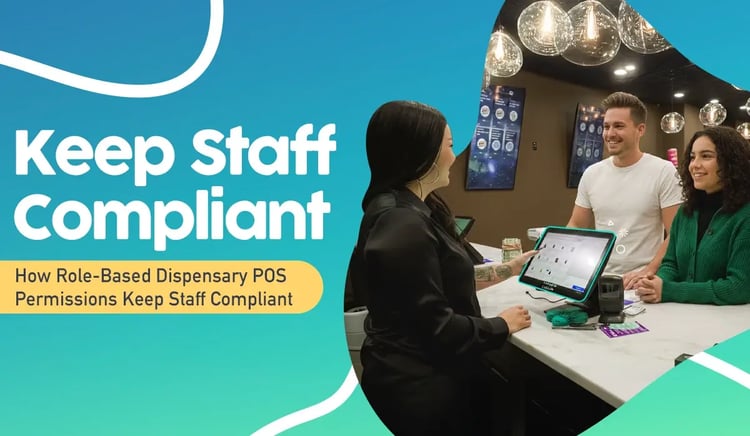
In cannabis retail, compliance depends on control. Every price override, inventory adjustment, refund, and void must be traceable, and regulators expect dispensaries to be able to prove that only authorized staff members can perform high-risk actions. When dispensary POS permissions are too broad or easily overridden, seemingly small day-to-day shortcuts can quickly turn into compliance liabilities.
Role-based dispensary POS permissions keep staff compliant by aligning system access with job responsibility. Instead of relying on policy alone, a POS with permission-based access enforces separation of duties, requires approvals for sensitive actions, and creates an audit trail that shows who did what and when. Platforms like Cova operationalize these controls so dispensaries can protect compliance without slowing down sales.
Key Takeaways
- Dispensary POS permissions control who can perform high-risk actions like price overrides, refunds, and inventory adjustments.
- Over-permissive access is a common root cause of audit issues, financial loss, and internal misuse.
- Defining who can initiate an action and who must approve it creates built-in checks and balances.
- Audit logs and unique logins create accountability and traceability.
- Permissions must be reviewed regularly as staff and operations evolve.
Why Do Dispensaries Need Role-Based POS Permissions?
Role-based dispensary POS permissions assign system access based on defined responsibilities, not convenience or seniority. In a heavily regulated industry like cannabis retail, that’s a big deal.
Regulators routinely assess whether dispensaries can demonstrate internal controls. That includes being able to show:
- Who performed a transaction or adjustment
- Whether that action required approval
- Whether overrides were logged
- Whether staff members’ access aligns with their job function
Without clearly defined access levels, compliance risk goes up – especially in environments with high staff turnover, multiple locations, or frequent promotional changes. For example, if every frontline employee can override pricing or adjust inventory, small operational shortcuts can become systemic vulnerabilities. And even if misuse never occurs, the absence of control itself can warrant an audit.
Role-based POS permissions shift your dispensary from a reactive posture to a preventive one. Instead of investigating discrepancies after they happen, you can reduce the likelihood of unauthorized POS actions in the first place. Cova supports assigned security roles to common dispensary positions, helping operators standardize access across teams and locations.
What Risks Come From Over-Permissive POS Access?
In our experience, over-permissive dispensary POS access typically goes unnoticed until a compliance review or financial discrepancy reveals it. The most common risk areas include pricing, inventory, refunds, and reporting visibility.
- When too many staff members can adjust pricing, margins erode and promotional rules are inconsistently applied. If your budtenders keep overriding rules, it’s usually not an issue of poor training; rather, it’s a sign of unclear role boundaries or missing approval workflows.
- Inventory adjustments pose another significant compliance risk. Cannabis inventory must reconcile precisely with regulatory tracking systems like METRC and BioTrack. If you have broad POS access that allows multiple employees to adjust quantities without oversight, discrepancies can compound quickly.
- Refunds and voids are also high-risk actions. While there are plenty of legitimate cases, they need to be properly authorized and documented – a process that’s made much simpler with structured POS permissions.
- Shared logins or incomplete audit logs weaken governance even further. If the POS system cannot clearly attribute actions to specific individuals, accountability goes out the window.
Cova uses granular role controls and audit-ready logging to keep high-risk dispensary actions secure and traceable.
What Are Standard POS Access Levels for Dispensary Staff?
Separation of duties is critical when it comes to assigning POS access for your dispensary staff. An employee’s level of access should reflect their level of responsibilities, not just their job title.
We have found that in most dispensaries, POS access levels usually align with these roles:
- Budtenders: Typically authorized to process sales, verify identification, and apply approved promotions. Access should focus on completing transactions accurately and efficiently.
- Shift leads or supervisors: May have limited override authority, such as approving certain refunds or resolving transaction issues during busy periods.
- Inventory managers: Generally control receiving, reconciliation, and inventory adjustments, as these actions directly affect compliance reporting.
- Store managers: Often require broader visibility into sales performance and staff activity logs at their store, along with the ability to approve higher-risk exceptions.
- Owners or administrators: Typically oversee system configuration and multi-location reporting, but even this access should be structured and documented.
Consistency across locations is critical; multi-store operators especially benefit from standardized role definitions to prevent uneven enforcement. Cova supports templated roles that help maintain consistent governance as dispensary teams expand.
What POS Permissions Should a Budtender Have?
Budtenders need enough access to serve customers efficiently, but not so much that they can introduce compliance risk. At a minimum, budtenders should be able to:
- Process sales
- Verify customer compliance requirements
- Apply system-configured promotions
- Complete standard checkout functions
However, actions that materially impact financial or compliance reporting like manual price overrides, refunds above certain thresholds, or inventory adjustments should generally require approval.
A common issue we see is budtenders overriding system rules. The solution isn’t more access – it’s refining role definitions and implementing structured workflows that keep your operation compliant. Cova allows cannabis retailers to configure approval-based overrides so sensitive, high-risk actions require authorization without bogging down the checkout process.
How Do Dispensary POS Permissions Differ for Managers and Supervisors?
Managers and supervisors need broader POS access than budtenders – but that access still needs to be structured and properly logged. The key distinction is approval capability, not unrestricted authority.
Managers may approve price overrides or authorize refunds when justified. They may also review sales performance and staff activity logs to monitor compliance trends. However, even managerial approvals should be documented automatically within the POS.
The ability to modify roles or permissions should remain tightly controlled, because allowing unrestricted role changes can undermine the entire structure. Cova supports granular permission configuration for every role in the dispensary, giving you structured oversight without weakening separation of duties.
What Are Common Mistakes Dispensaries Make with POS Permissions?
One of the most common mistakes we see dispensaries make with their POS is using shared logins. Accountability becomes impossible without unique credentials; every employee should have their own system access.
Another frequent issue is granting temporary access that never gets revoked. For instance, if you’re short on staff or slammed during a holiday rush, you may grant expanded permissions for employees – and then completely forget about them after the dust settles.
Role changes can also introduce risk. If permissions aren’t updated when employees are promoted or reassigned, they may retain access that no longer aligns with their responsibilities.
Finally, we see some dispensaries fail to conduct regular access reviews. Reassessing POS permissions on a defined schedule will help ensure they reflect your current staffing and operational realities; we recommend quarterly reviews as a best practice. Cova provides easy visibility into user roles and activity logs so you can identify and correct governance gaps before they become a compliance issue.
How Do You Set Up Role-Based POS Permissions in a Dispensary?
To set up effective dispensary POS permissions, you need a structured process. We’ve found the following steps to be highly effective:
- Clearly define each role based on operational responsibilities. Avoid vague titles – mapping out exactly what each role must and must not be able to do will help.
- Assign the minimum required access for each role. Grant only what is necessary to complete core duties.
- Design approval workflows for high-risk actions like refunds, inventory adjustments, and price overrides. Structured approvals reduce unnecessary friction while maintaining control.
- Finally, establish a regular POS permissions review schedule. Quarterly reviews are a common best practice, but high-turnover environments may require more frequent assessments.
Cova supports this process with configurable security roles, approval-based workflows, and audit-ready visibility tools.
How Do Role-Based Dispensary POS Permissions Support Compliance Audits?
During compliance audits, regulators typically focus on traceability and control. They want to see that internal policies aren’t just written but enforced. Strong cannabis dispensary POS permissions allow operators to demonstrate:
- Clear separation of duties
- Documented approval workflows
- Unique user accountability
- Complete activity logging
When permissions align with documented policies, audits become verification exercises rather than investigations. Cova supports audit-ready logging and structured reporting to help dispensaries confidently demonstrate compliance.
Audit Checklist: Are Your Dispensary POS Permissions Actually Enforcing Compliance?
Ask yourself the following questions to determine whether your dispensary POS is up to snuff compliance-wise:
- Does each employee have a unique login?
- Are price overrides restricted to authorized roles?
- Do inventory adjustments require approval?
- Are sensitive actions logged and traceable?
- Do permissions reflect current job roles?
- Are access reviews documented?
If the answer to any of these is no, your system likely isn’t fully enforcing compliance controls.
How Cova POS Supports Role-Based Permissions and Dispensary Staff Compliance
Cova POS is built specifically for regulated cannabis retail. The platform includes:
- Recommended security roles aligned with common dispensary job positions
- Granular permission controls by role
- Approval-based overrides for high-risk actions
- Detailed, audit-ready logging and visibility
- Support for ongoing governance across staff changes and multiple locations
POS permissions shouldn’t be a technical afterthought. Cova operationalizes them as a frontline compliance control, helping dispensaries reduce risk while maintaining efficient service and an impeccable customer experience.
FAQ
How often should dispensary POS permissions be reviewed?
Most cannabis retail operators conduct formal reviews quarterly or after major staffing changes. Regular, documented reviews demonstrate governance maturity during compliance audits.
Who should own POS permission governance?
Responsibility typically sits with a store manager, compliance officer, or operations lead. Clear ownership is critical to prevent permissions from becoming neglected administrative settings.
What happens if permissions are not documented during a compliance audit?
Even if no misuse occurred, the inability to demonstrate structured access control may be viewed as a governance weakness and could trigger corrective action requirements.
Next Steps for Cannabis Retailers
Role-based dispensary POS permissions are not a one-time configuration; they’re an ongoing compliance safeguard. If your current setup hasn’t been formally reviewed – or if overrides are occurring frequently – it may be time to reassess your role definitions and approval workflows.
Cova helps dispensaries translate operational responsibilities into enforceable, traceable permissions that support compliance, accountability, and long-term operational control. If you’re ready to learn more and see our award-winning system in action, let’s talk!