

If you’ve successfully launched and are running your first cannabis dispensary location, you may be starting to wonder what it takes to scale a cannabis business beyond a single store. Maybe you’re seeing longer lines at peak hours, your staff is steady, and customers keep asking when you’ll open closer to their neighborhood. That kind of excitement and engagement is encouraging – but in cannabis retail, scaling from one store to a multi-location or multi-state business is not just a matter of copying and pasting what worked the first time.
Every new dispensary location comes with its own hurdles. These typically include municipal approvals, lease negotiations, buildout decisions, staffing needs, compliance rules, and potentially additional licenses. In the U.S., you’ve also got to consider 280E tax constraints and fragmented state regulations if you’re expanding into a different state. In Canada, you’ll need to navigate provincial frameworks, centralized wholesalers, and federal marketing restrictions. The margin for error is small, and a misstep in one location can jeopardize the reputation and stability of the entire brand.
This guide is designed for cannabis retailers who are already running at least one store and want a practical, operations-focused roadmap for expansion. You’ll learn why scaling in this industry is uniquely challenging, how to build a repeatable operating model, what growth strategies are available to you, which KPIs signal that you are truly ready to scale, and how to approach funding, compliance, staffing, and technology in a multi-location environment.
- Key Facts & Takeaways
- What Makes Scaling a Retail Cannabis Business Challenging?
- How Do You Build a Repeatable Retail Cannabis Operating Model?
- What Are the Best Growth Strategies for Expanding a Cannabis Retail Operation?
- Which KPIs Show That a Cannabis Retailer Is Ready to Scale?
- How Do Cannabis Retailers Fund Multi-Location Expansion?
- Compliance Requirements That Shape Multi-Location Cannabis Retail Growth
- Building and Managing a Team for Multi-Location Cannabis Retail Growth
- What Technology Stack Does a Multi-Location Cannabis Retailer Need?
- Common Cannabis Retail Scaling Risks and How to Mitigate Them
- Year-Two Cannabis Retail Scaling Checklist (Quick Reference)
- FAQs
- Next Steps
Key Facts & Takeaways
- You’re scaling a system, not a store. Successfully scaling a cannabis business depends on having a standardized operating model – SOPs, training, merchandising, and reporting – that any location can follow under any manager.
- Licensing, capital, and compliance dictate your pace. Licensing windows, zoning timelines, buildout costs, 280E tax requirements, and provincial/state compliance rules all shape how fast you can grow and how many locations you can support.
- Scalable dispensary technology is absolutely critical. A cannabis-specific POS with seed-to-sale integration, centralized reporting, and inventory controls is essential to maintaining compliance and consistency across stores.
- KPIs must zoom out from one store to the portfolio. When you scale, you’re managing portfolio-level cashflow, inventory turns, and labor efficiency, plus variance between locations – not just P&L from Store #1.
What Makes Scaling a Retail Cannabis Business Challenging?

Scaling any retail concept requires you to replicate a working model in more locations. In cannabis, you’re doing that while also replicating licensing, security, seed-to-sale tracking, marketing restrictions, and often cash-heavy operations. Each store becomes its own regulated entity, even if it sits under the same corporate umbrella, which means every expansion step carries regulatory as well as commercial implications.
A single flagship store can be successful because the founder is present, a few strong staff members hold everything together, and problems can be solved on the fly. When a second or third location is added, that hands-on control disappears. Processes that were informal suddenly need to be formal. Decisions that were instinctive must be grounded in data. And mistakes that were contained within one building can ripple across the entire organization if they involve compliance, taxes, or brand reputation.
Regulatory Hurdles and Licensing Constraints
Almost every new cannabis retail location begins with licensing. You’ll need to check with your local jurisdiction’s cannabis laws to be sure, but generally speaking, most adult-use and medical cannabis licensing agencies license each individual location, not just the business entity. This process typically includes securing municipal approval, demonstrating compliance with zoning and buffer requirements, and showing regulators that you already have systems in place for inventory, security, and mandated compliance reporting.
It is worth noting that some jurisdictions allow limited operational expansion under a single license, such as delivery endorsements or co-located retail activities. Of course, these exceptions do not eliminate the need for location-specific regulatory approval. Again, you’ll need to check with your local jurisdiction’s laws and regulations if you’re planning on expanding.
In many jurisdictions, licensing is capped, application windows are competitive, and scoring rubrics reward operators with experience and proven compliance records. Municipalities may impose their own caps or moratoriums, restrict dispensaries to industrial zones, or layer on additional local conditions. In Canada, provincial regulators and their rules add another layer on top of federal law.
The bottom line? If you’re wanting to open another dispensary location, be prepared to navigate the full regulatory gauntlet again.
Marketing and Advertising Restrictions
Cannabis marketing is highly constrained almost everywhere, and those constraints shift from state to state and province to province. Operators must ensure their advertising does not target minors, make prohibited health or lifestyle claims, or break rules around discounts, loyalty programs, and event sponsorships. Mainstream digital ad platforms are still restrictive on cannabis messaging, which means retailers must rely more heavily on SEO, content marketing, email and SMS (within the rules and guidelines), local events, and in-store experiences.
For a multi-location brand, this means your marketing framework must be flexible. You need a core brand identity that can be expressed in ways that remain compliant in each jurisdiction. The challenge is to avoid becoming a patchwork of different voices and offers simply because the rules differ by region. Scaling your marketing is as much a legal exercise as a creative one.
Supply Chain and Inventory Access
A bigger retail footprint requires a stronger supply chain. Of course, product availability, pricing, and quality vary widely between markets. In the U.S., some states rely on distributors, while others allow direct relationships with cultivators and manufacturers. In Canada, provincial wholesalers control distribution and catalog availability. Rules related to SKU limits, purchasing caps, and testing standards also differ.
If your first store has access to a deep vendor network and competitive pricing, don’t assume you’ll have the same advantages when you move into a neighboring city or state. Part of your growth strategy must include evaluating how you will source product, maintain assortment consistency, and protect margins in each new market you enter.
Taxation, Cashflow Demands, and Cost Structure
Cannabis taxation is another factor that complicates scaling. In the U.S., Section 280E of the Internal Revenue Code prevents operators from deducting most ordinary business expenses, which means they effectively pay federal tax on gross profit rather than net income. That dynamic can push effective tax rates to levels that would be unthinkable in other sectors and leaves less after-tax cash available to reinvest in growth.
At the same time, expansion demands significant capital. New licenses, design and construction, security infrastructure, inventory for launch, and additional staffing all require upfront investment. Operating expenses then rise as you carry leases, payroll, and ongoing compliance and security costs across multiple locations, often before new locations have ramped to full productivity. When licensing or buildout delays occur – and they frequently do – cashflow pressure can become intense. Scaling successfully means modeling these scenarios in advance rather than hoping early sales will quickly cover the gap.
Compliance Complexity at Scale
Finally, compliance complexity multiplies with each additional store. Every location introduces new points of failure: more staff who may make mistakes with ID checks or discounts, more deliveries and inventory transfers to reconcile, and more track-and-trace interactions that must remain accurate. States that use Metrc, BioTrack, or custom systems each impose their own reporting expectations and reconciliation calendars, while Canadian stores must align their point-of-sale and inventory records with provincial and federal reporting.
How Do You Build a Repeatable Retail Cannabis Operating Model?

Before you start applying for a secondary location license, ask yourself one simple question: Could store number two operate as well as store number one if you disappeared for a month? If the answer is “probably not,” you should focus on making your operating model repeatable before you begin to scale.
A repeatable model rests on four pillars:
- 1. Documented standard operating procedures
- 2. Consistent customer experience
- 3. Data-driven decision making
- 4. Disciplined supply chain and marketing practices that work within regulations
Standard Operating Procedures
Standard operating procedures (SOPs) are the backbone of a multi-location retail brand. Rather than relying on a few experienced staff members who know how things are done, you need clear, written procedures for all of the critical processes that affect compliance, security, customer experience, and profitability.
Your SOPs should explain:
- Exactly how ID verification is performed at the door and at the point of sale
- How cash is handled throughout the day
- How opening and closing routines are executed
- Steps for receiving inventory and quarantining product when required
- Labeling and putting items into active stock
- Performing regular cycle counts
- How variances are investigated and corrected
- How waste and destructions are documented
- How incident reports are filed and escalated
The most effective SOPs live inside your systems as much as they do in a binder. When your point of sale, training tools, and checklists reinforce the same processes, the likelihood of consistent execution increases dramatically.
Store Format and Customer Experience Consistency
Customers should walk into any of your locations and immediately recognize that they are in the same family of stores. That doesn’t mean every building must look identical, but there should be a shared logic to the layout, signage, merchandising, and service style.
Consider the journey from the sidewalk to the point of sale. Is the entrance clearly marked? Are age-verification steps obvious and respectful? Do customers know where the line forms, where to browse, and how to ask for help? Are your fixtures, lighting, and display strategies aligned with your brand? When frontline workflows are consistent, new employees can move between locations more easily, training becomes more efficient, and customers feel comfortable visiting any of your stores.
Data-Driven Decision Making
The larger your footprint becomes, the more you must rely on data rather than intuition. At a minimum, each store should have a clear monthly and weekly rhythm for reviewing sales, customer, labor, and inventory metrics. Leadership should be able to see these metrics at a portfolio level to compare performance between locations.
This kind of visibility allows you to identify strong and weak performers, understand which categories and products are driving profit, and make informed decisions about staffing, pricing, and promotions. It also helps you catch early signs of trouble, such as rising shrink rates or declining conversion, before those problems become expensive.
As you scale, you also need centralized ownership of pricing, reporting, and compliance, with store-level managers focused on execution rather than policy. Without this shift, inconsistencies multiply faster than leadership can correct them. The role of reporting also changes with scale, moving from basic performance tracking to exception-based dashboards that highlight where a location is drifting from the operating model. You need to be able to see what’s happening at any location at any given time; with Cova’s cannabis retail POS platform, you get detailed reporting analytics and features including dashboards, compliance tools, payment reconciliation, inventory tracking, and integrations for sales, marketing, and operations.
Supply Chain Management Best Practices
As you scale, your relationship to inventory changes. Product becomes a larger line on your balance sheet, and mistakes become more costly. Strong supply chain management at the retail level involves forecasting demand by category and brand, setting clear ordering cadences, and maintaining a sensible target for days of inventory on hand.
It also involves holding vendors accountable. Developing scorecards that track fill rates, delivery timeliness, product quality, and responsiveness gives you a more objective view of which partners are supporting your growth. In markets where multi-store purchasing is allowed, coordinated orders can help you negotiate better terms. At the same time, you need a plan for aging inventory: how you will mark down, bundle, or otherwise move slow sellers without training customers to wait for discounts.
Shrink control is another priority. Camera coverage, blind counts, divided responsibilities for cash and inventory, and system-level alerts all play a role in reducing both internal and external losses. Without these controls, each new store you open simply multiplies your exposure.
Navigating Retail Cannabis Marketing Regulations
Your dispensary marketing strategy must live comfortably inside the regulatory frameworks of every market in which you operate. That starts with a brand voice that does not rely on prohibited claims or imagery. From there, you can build jurisdiction-specific playbooks that describe how that brand should show up in local channels.
In practice, this might mean using education-focused content and search optimization as a universal foundation, then layering in email, SMS, in-store activations, or community partnerships where local regulations allow. It might also mean operating different loyalty structures in different markets: a points-based system in one jurisdiction, a simple “preferred pricing” model in another, and no loyalty program at all where it is prohibited. Documenting these differences and training staff accordingly helps you avoid accidental violations and creates a more coherent brand presence for customers.
What Are the Best Growth Strategies for Expanding a Cannabis Retail Operation?
Broadly speaking, retail cannabis operators grow by opening additional owned stores, acquiring existing dispensaries, entering new states or provinces, or layering in vertical integration. Each path comes with its own risks and operational demands.
Opening Additional Owned Stores
Opening another company-owned store is the most straightforward form of growth conceptually, but it is rarely the easiest in practice. It requires you to repeat the entire process of licensing, municipal approval, site selection, design, construction, hiring, and launch.
The advantage of this path is control. You can choose a location that fits your brand, design the layout to support your preferred customer experience, and implement your operating model from the first day of training. The disadvantage is that you absorb all of the upfront risk. If licensing delays occur, zoning debates drag on, or construction timelines slip, you are the one carrying the financial burden.
Because of this, many operators treat each new owned store as its own project with a detailed timeline, budget, and success criteria. They treat pre-opening as a discipline rather than an afterthought, including staff training, soft-opening periods, and controlled ramp-up of marketing.
Acquiring an Existing Dispensary
Acquiring an existing dispensary can be a faster way into a market, especially where new licenses are scarce or caps are in place. In theory, you gain immediate access to a licensed premises, an existing customer base, and a trained staff.
In reality, acquisitions require careful due diligence. You need to understand the target store’s compliance history, track-and-trace records, inventory management practices, tax filings, labor issues, and lease terms. Any unresolved violations or ongoing investigations can follow you as the new owner. Legacy technology stacks and ad hoc processes may also need to be completely replaced.
The cultural transition is another factor. Integrating the acquired team into your brand, retraining them on your SOPs, and communicating changes to existing customers all require attention. Acquisition can be a powerful growth lever, but it is not a shortcut around the operational work that scaling demands.
M&A vs. Organic Growth: Should You Acquire a Dispensary or Open a New Store?
The choice between opening a new dispensary location organically or acquiring an existing store depends on several factors including licensing availability, speed to market, capital structure, and operating maturity. Organic growth offers more control and cleaner compliance, while acquisitions can accelerate expansion but introduce inherited risk and integration complexity.
Opening additional owned stores is usually the better option when:
- New licenses are available or licensing timelines are predictable
- Your first store is consistently profitable and operationally stable
- SOPs, training, and reporting are already standardized
- You want full control over brand, culture, and store design
- You prefer lower compliance and integration risk, even if growth is slower
On the other hand, M&A may be the better strategy when:
- Licenses are capped, scarce, or unavailable in the target market
- Speed of market entry is critical
- You have access to sufficient capital and deal expertise
- Your team can absorb post-acquisition integration work
- You are prepared to remediate legacy compliance, inventory, or staffing issues
Common mistakes when choosing a growth path include:
- Using acquisitions to save time without planning for system and culture integration
- Opening multiple organic stores before the first location is truly repeatable
- Underestimating inherited compliance and inventory risk in acquisitions
- Scaling faster than leadership capacity, reporting, and controls can support
Many successful multi-location cannabis retailers use organic growth to refine and prove their operating model; use targeted acquisitions to enter capped or strategic markets; standardize systems, SOPs, and reporting immediately after expansion to restore consistency. This hybrid approach balances control with speed and reduces long-term operational risk.
Expanding Into Another State or Province
Crossing a state or provincial border fundamentally changes the nature of the business, shifting a retailer from single-market growth to managing multi-state cannabis operations across different regulatory, pricing, and competitive environments.
From an operational perspective, you need to adjust your systems to work with the local track-and-trace platform or provincial reporting tools, ensure your product catalog and labels comply with local standards, and adapt your staffing model to local wage levels and labor laws. From a strategic perspective, you must decide whether to lead with the same assortment and merchandising strategy or adapt it to local tastes and spending power.
Successful cross-border expansion usually starts with deep research and a pilot approach: one or two locations in a new market that serve as test beds for your model. Once you understand how your brand performs and what needs to change, you can make more informed decisions about further growth in that region.
Vertical Integration Considerations for Retail
Some retailers consider expanding “upstream” into cultivation and manufacturing. Vertical integration can offer benefits such as more secure access to supply, better gross margins on house-branded products, and additional revenue streams. However, it also introduces entirely new regulatory requirements and operational complexities.
Cultivation and manufacturing require different expertise, different facility types, different licensing, and different risk profiles. They are effectively separate businesses. If your team does not have experience in these areas, you will need to hire or partner with those who do. You will also need to ask whether the capital and attention required to build vertical integration could be better spent on strengthening your retail model and opening more stores.
Scaling a Retail Brand Across Markets
Regardless of which growth pathway you pursue, you are ultimately scaling a brand. That brand needs a clear identity – visually, verbally, and experientially – that can be executed in many contexts.
Brand guidelines describe how your stores should look, how staff should speak to customers, how menus should be organized, which kinds of products you prioritize, and how you approach pricing and promotions. From there, each market can adapt within defined boundaries to comply with local rules. For example, guidelines might state that every store will carry a core set of staple SKUs that express your brand, while leaving room for a percentage of shelf space dedicated to local favorites or regional exclusives.
We’ve written extensively about different cannabis retail models you may be considering for expansion – go here to read about franchising vs. licensing, and click here to learn more about managed services vs. the DIY model.
Which KPIs Show That a Cannabis Retailer Is Ready to Scale?
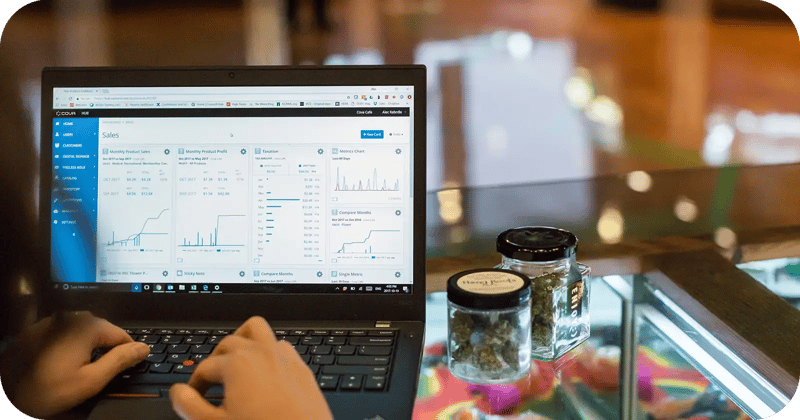
The top key performance indicators that suggest readiness to scale your cannabis retail operation are:
- Consistent profitability: Positive cashflow after accounting for 280E taxes in the U.S. or all provincial and federal obligations in Canada.
- Stable gross margins: By category, with discounts and promotions under control.
- Healthy customer metrics: Growing or stable traffic, repeat-visit rates, and loyalty engagement.
- Inventory discipline: Target inventory turns by category, limited aged inventory, and shrink within acceptable thresholds.
- Labor efficiency: Labor percentage of sales within your model, plus the ability to maintain service levels without constant overtime.
- Process reliability: Few compliance incidents, clean audits, and predictable month-end reconciliations.
When these are in place – and you can explain why they’re happening – you’re in a much better position to replicate success.
How Do Cannabis Retailers Fund Multi-Location Expansion?

Because cannabis businesses face limited access to traditional banking and mainstream loans in many jurisdictions, funding expansion often requires creativity and a mix of sources.
Many operators start by reinvesting profits from the first store. This approach allows you to retain control and avoid dilution, but it can slow growth and leave less cushion if timelines slip. Others use private credit, such as real-estate-backed loans, equipment financing, or working capital lines offered by specialized cannabis lenders. These products can unlock growth faster but may carry higher interest rates and tighter covenants.
Sale-leaseback arrangements, in which you sell your real estate to an investor and lease it back, can release significant capital for expansion while keeping your operations in place. The tradeoff is a long-term lease obligation and the need to manage that relationship carefully. Finally, equity capital from private investors, family offices, or cannabis-focused funds can support more aggressive growth plans, but it requires you to give up some ownership and often involves more formal governance.
The crucial step is to develop a realistic financial model for each new store. That model should include licensing and professional fees, design and construction costs, security and technology investments, initial inventory buys, and several months of operating expenses. It should also reflect conservative assumptions about how quickly the new store will ramp up to its target sales and profitability. With that model in hand, you can evaluate which funding mix makes sense for your risk tolerance and growth goals.
Banking and Payment Infrastructure for Multi-Location Growth
A single-store dispensary operator can sometimes get by with clunky payment and banking processes. A multi-location operator can’t. One banking disruption or payment outage doesn’t hurt just one store – it shakes customer trust across your whole brand and creates chain-wide operational chaos.
Multi-location retailers need cannabis-friendly banking, reliable payment processing, and standardized cash-handling systems. Successful expansion depends on stable deposit services, compliant payment rails, and financial partners that can support multiple jurisdictions without service interruptions.
Cannabis-Friendly Banking for Retail Expansion
The big idea here is stability. You want a financial institution that actively serves cannabis retailers and has a real compliance program – not one that’s “tolerating” cannabis quietly and could shut you down the moment their risk posture changes.
As you scale, you’ll likely need support for business checking, payroll, tax remittance, electronic vendor payments, and the ability to manage multiple accounts or even multiple entities cleanly. You’ll also need to stay organized on documentation. Banking partners will periodically refresh KYC (know your customer), ownership details, licensing documents, and operating information, so treat that paperwork like a recurring operations task, not a one-time onboarding event.
Payment Processing Options That Scale
Dispensary customers expect cashless options. The challenge is choosing options that are stable and compliant. In cannabis retail, commonly used options include PIN debit, direct ACH-based payments, and other compliant cashless solutions depending on your market and provider. What you want to avoid is building your business around unstable “workarounds” that can get shut off without warning.
As you scale, consistency matters. If Store #1 has one payment experience and Store #3 has another, you’ll get customer and staff confusion and messy reconciliations for your finance team. Standardize the payment experience as much as possible across the chain, and compare providers based on settlement speed, fee transparency, reliability, and multi-store reporting tools.
Cash Management for Multi-Store Operations
Even if you have great cashless options, cannabis retail is still often cash-heavy. With multiple stores, cash management becomes a bigger operational risk: more drawers, more drops, more deposits, more opportunities for mistakes, and more exposure to internal theft.
This is where standardized cash SOPs pay for themselves. You want clear rules for drawer limits, drops, reconciliation, variance review, and escalation. You also want systems that make reconciliation easier – ideally POS-integrated – and a consistent pan for secure transport or armored pickup if that’s part of your operation.
Choosing Scalable Financial Partners
When you pick banking and payment partners, look beyond the sales pitch and ask: Can this entity support the business you’re building, not just the business you have today?
Prioritize partners with real cannabis experience, multi-state or multi-province capability where relevant, transparent pricing, stable rails, and responsive support. Watch for red flags like opaque fees, inconsistent settlement, unclear compliance posture, or support teams that feel stretched thin.
Compliance Requirements That Shape Multi-Location Cannabis Retail Growth
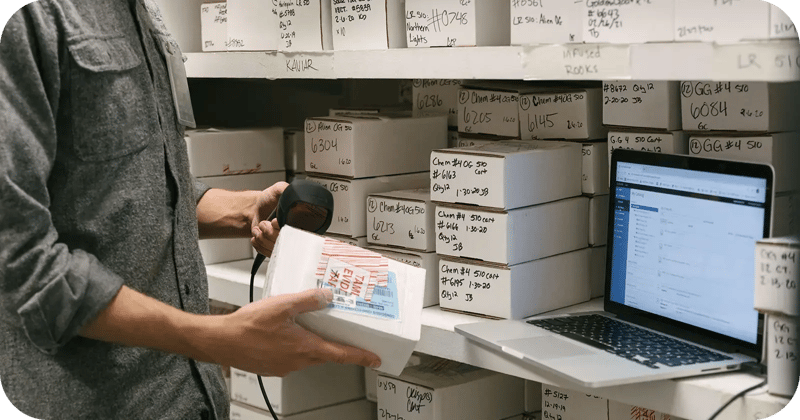
Multi-location cannabis retail compliance requires at least three layers:
- 1. Standardized store-level execution: ID checks, sales limits, returns, and incident reporting done the same way at every location
- Inventory integrity: Daily and periodic reconciliation processes that keep physical stock aligned with system records
- Reporting and audit readiness: Ability to produce the documentation regulators expect
This is one of the reasons track-and-trace systems exist in the first place. For example, Metrc is built around a traceability model that records inventory movements and sales data, and it is often integrated via POS reporting workflows. BioTrack provides government traceability solutions in several jurisdictions and offers compliance tracking infrastructure for diversion prevention and public safety. Regardless of which traceability system your jurisdiction has chosen, the takeaway from an operational standpoint is the same: your POS and compliance workflows must be designed to produce accurate, auditable data.
Cannabis Marketing Compliance Constraints
In cannabis, marketing often touches the most sensitive regulatory concerns: youth exposure, prohibited claims, and public visibility. That means you need clear rules for what you can do in each jurisdiction, especially around advertising restrictions, loyalty program limitations, and signage/window visibility rules. If you run multiple locations, you also need a review process so local teams aren’t improvising campaigns that create risk.
The goal here is consistency: brand-aligned marketing that stays inside the rules everywhere you operate.
Building and Managing a Team for Multi-Location Cannabis Retail Growth

Scaling a dispensary operation requires a multi-store leadership structure, trained managers, consistent onboarding, and roles dedicated to compliance and inventory. Retailers need documented staffing processes and performance expectations that every location follows.
At a minimum, you need store managers who can run the day-to-day without constant rescue. You also need a bench: assistant managers and keyholders who can step up when someone quits, takes leave, or gets pulled into a new-store opening. And as you scale, it becomes increasingly hard to manage compliance and inventory “on the side.” Dedicated ownership of these functions – whether centralized or distributed – reduces the chance that important controls get skipped when things get busy.
Training is where a lot of expansion plans quietly fail. Store #2 doesn’t struggle because the team is bad; it struggles because the training is inconsistent, the expectations aren’t clear, and the operating model isn’t embedded. A scalable onboarding program should teach how your stores operate and should be reinforced continuously.
What Technology Stack Does a Multi-Location Cannabis Retailer Need?
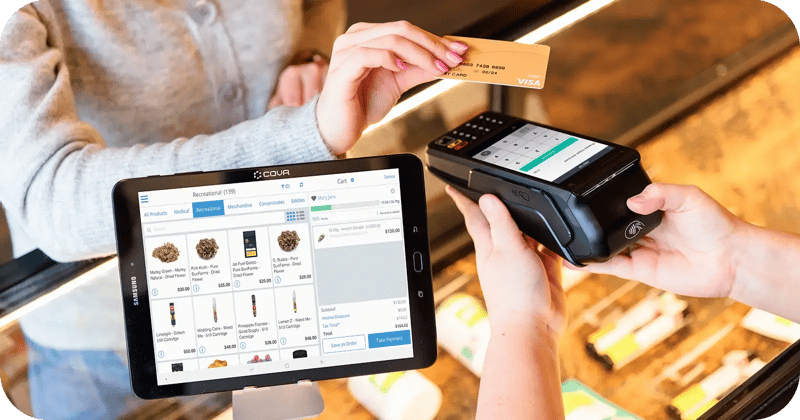
At scale, technology does not just support operations; it becomes the primary control system that keeps locations consistent, compliant, and visible. Cannabis retailers need a POS with centralized reporting, real-time inventory controls, automated compliance, and multi-store menu syncing. Integrated ecommerce, analytics, and forecasting tools strengthen consistency across all locations. A strong multi-location tech stack makes it easier to standardize pricing, menus, workflows, and reporting while still allowing for local differences where the law requires it.
POS Requirements for Multi-State Retail
A POS built for multi-state cannabis retail must act as a control system, not just a transaction tool. It needs to enforce compliance, centralize reporting, and give leadership clear visibility across locations.
A scalable POS should support:
- Track-and-trace integration where required by state or province
- Centralized, multi-location reporting to compare performance and spot variance
- Audit logs that record who did what and when, especially for returns, discounts, price overrides, and inventory adjustments
- Role-based permissions so only authorized staff can access sensitive functions
- Real-time visibility across stores to prevent small issues from becoming chain-wide problems
Without these capabilities, leadership ends up reacting to issues after they occur instead of preventing them through early detection and consistent controls.
Dispensary Ecommerce & Online Ordering
Online cannabis ordering is a major growth lever – but only if it’s synced properly. The biggest operational failure with ecommerce is inventory mismatch: customers order items that aren’t actually available, staff scrambles, substitutions create complaints, and trust erodes. Real-time inventory syncing between ecommerce and POS reduces those issues dramatically. You also need to be aware of ecommerce compliance nuances such as pickup, delivery rules, and age verification that may differ by jurisdiction.
Inventory & Logistics Tools
As you scale, you want tools and workflows that support purchase orders, receiving, cycle counts, discrepancy investigation, and transfers between locations. The goal is twofold: keep shelves stocked with the right assortment, and protect cash by avoiding bloated inventory and silent shrink.
Inventory tools also help standardize vendor management and replenishment rules so purchasing doesn’t become a constant argument between stores.
BI & Multi-Store Reporting
BI reporting (Business Intelligence reporting) is what turns your data into management decisions. But with multiple stores, you need something more reliable than just your gut instinct. You need dashboards and reporting that quickly answer:
- Which store is drifting?
- Which category margins are compressing?
- Are promotions improving contribution or just driving low-quality volume?
- Is labor efficiency holding steady?
The most useful BI doesn’t just show numbers; it highlights exceptions and trends so you can intervene early and consistently.
Common Cannabis Retail Scaling Risks and How to Mitigate Them
Most of the problems cannabis retailers run into when scaling come from the same predictable pressure points.
- Expanding too fast. When you open multiple stores back-to-back, you strain leadership bandwidth, training quality drops, and your strongest people get pulled away from Store #1. Meanwhile, the new locations are ramping and burning cash. The fix is pacing: expand in a way that preserves the health of the core business while the new store stabilizes.
- Compliance failures are another common risk, and they usually come from inconsistency – different stores handling the same scenario differently, or teams skipping controls when they’re busy. Embed compliance into daily workflows and make audit readiness a habit, not a scramble.
- Operational inconsistency is the brand killer. Customers notice when one store feels polished and another feels chaotic. The solution is standardized experience design, standardized training, and clear management accountability.
- Inventory issues often show up as stockouts, overbuying, aged inventory, and rising shrink. These are usually symptoms of weak forecasting, loose receiving controls, or inconsistent cycle counts. Disciplined replenishment, strong receiving SOPs, and regular inventory verification that doesn’t get put off when things are busy are the keys to mitigating these inventory problems.
Year-Two Cannabis Retail Scaling Checklist (Quick Reference)
Your licensing strategy should be clear enough that you can explain your pipeline, timelines, and municipal constraints without guessing. SOP maturity should be at the point where the store runs consistently even when your best manager is on vacation. Store #1 profitability should be stable, and your cashflow buffer should be large enough to survive delays and a slower-than-expected ramp.
Leadership readiness is non-negotiable. You need managers who can run stores, plus a bench that prevents turnover from becoming a crisis. You also want evidence of compliance strength: clean internal audits, organized documentation, and reconciliation habits that don’t fall apart under stress.
Finally, your tech stack should be consolidated and consistent across locations, and your supply chain should be reliable enough that expansion doesn’t mean constant stockouts and emergency buys.
FAQs
What’s the best way to determine whether a market can support another dispensary location?
Start with normal retail logic – traffic patterns, visibility, competition, and demographics – but don’t stop there. In cannabis, zoning rules and local politics can matter as much as demand. Look closely at store density, licensing conditions, and what your brand can realistically do to attract customers within local marketing restrictions. If your plan relies on promotions that aren’t allowed in that market, it’s not a real plan.
How much capital does a dispensary need to expand to a second location?
It varies widely, but the practical answer is more than most people think, and for longer than most people plan. Expansion capital has to cover not just the buildout and opening inventory, but the full ramp period and delays. In the U.S., make sure your cash plan accounts for 280E so you’re not surprised by tax obligations that reduce reinvestment capacity.
What should a cannabis retail brand consider before expanding nationally?
Assume fragmentation. Rules change, marketing constraints differ, wholesale access shifts, and operating models need adaptation. A brand that scales nationally usually has two things: a standardized operating system and the ability to localize execution without losing identity. If you don’t have both, national expansion turns into a patchwork.
What basic legal considerations apply before going public?
Before you even think about it seriously, you’ll need strong governance, clean financial controls, and a compliance track record that can withstand scrutiny. Public markets and regulators will look closely at tax exposure, liabilities, licensing stability, and internal controls. Going public is less about hype and more about proving the business is structurally sound.
How long does it take to open a second cannabis dispensary?
Often longer than you’d like. The timeline depends heavily on licensing and municipal approvals, not just construction speed. Build your plan around the reality that delays happen, and structure your financing and staffing so you can survive them without undermining your existing store.
Next Steps

Successfully scaling a cannabis business comes down to a few key pillars: a standardized operating model, a compliance structure that stays tight under stress, KPIs that prove your store is repeatable, a leadership bench that doesn’t collapse when you step away, and technology that gives you real visibility across the portfolio.
The most practical next step is to pressure-test Store #1 before you multiply it. Look for the places where success depends on a specific person, where controls get skipped when it’s busy, where inventory accuracy requires a month-end miracle, or where reporting isn’t reliable. Those weak points will not stay contained when you add locations – they’ll spread. Once you’ve got a rock-solid foundation in place, opening additional stores won’t feel like starting over; it’ll feel like installing a system you already know works.