
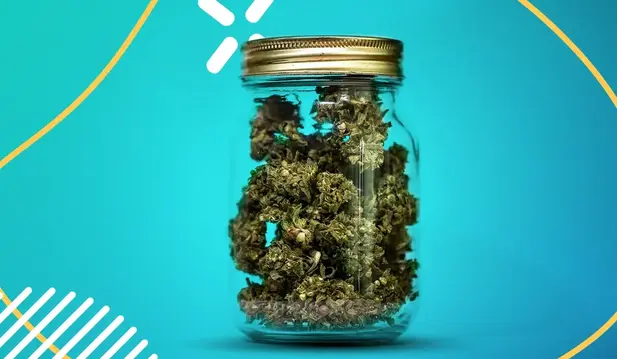
THCA flower is still considered legal hemp under federal law today, as long as its delta-9 THC concentration is 0.3 percent or less. However, on December 11, 2026, the federal THCA ban changes things. That’s when the law begins counting THCA toward total THC, and most THCA flower will stop qualifying as hemp.
THCA flower has carried the hemp category for years because the federal test only looked at delta-9. In this guide, we’re covering when the THCA ban applies to flower, why the new math rules most of it out, which states moved first, and what to do with the stock you’re holding now.
Current as of October 5, 2026. This article is for general information only, not legal advice. Always consult with your legal counsel and state regulator.
Key Takeaways
- Public Law 119-37 redefines federal hemp by total tetrahydrocannabinols, THCA included, at 0.3 percent or less on a dry-weight basis.
- The new definition takes effect November 12, 2026, but Public Law 119-103 confines it to products with cannabinoids the cannabis plant cannot produce until December 11, 2026. THCA flower faces the total THC test on that second date.
- Under USDA's conversion formula, flower at 20 percent THCA works out to roughly 17.7 percent total THC, about 59 times the hemp limit.
- Neither law includes a sell-through period. Flower that fails the test on December 11 cannot be sold as hemp after that date.
- For most retailers, the federal deadline comes last. As of October 2026, 33 states already count THCA toward total THC or prohibit hemp flower at retail, including Florida, Georgia, Texas and Tennessee.
Is THCA Legal Under Federal Law Right Now?
Yes. As of October 2026, THCA flower is federally legal if its delta-9 THC concentration is no higher than 0.3 percent on a dry-weight basis. That is the 2018 Farm Bill standard in 7 U.S.C. 1639o, and it measures delta-9 alone, until the federal THCA ban replaces it for flower on December 11, 2026.
THCA is the acid form of THC in the raw plant, and it converts to delta-9 when heated. That’s how flower can test at 20 percent THCA or more and still show under 0.3 percent delta-9.
The DEA has rejected that reading since 2023. Its May 13, 2024 letter took the position that cannabis-derived THCA is not hemp, because once converted for identification it is equivalent to delta-9 THC. Meanwhile, growers have long had to pass a total THC test before harvest under USDA rules (7 CFR 990.25(g)), so the gap has always been between the field test and the finished jar. State law may also be stricter, as it is in 33 states.
When Does the THCA Ban Take Effect?
For THCA flower, the federal date is December 11, 2026. The revised hemp definition becomes effective November 12, 2026, one year after Public Law 119-37 was enacted. A funding law signed on September 2, 2026 narrows that start: until December 11, the new definition applies only to products containing cannabinoids the cannabis plant cannot produce.
That law is Public Law 119-103, the Continuing Appropriations and Extensions Act, 2027. Section 2019 holds every part of the Section 781 amendments, the total THC test included, to those product groups until December 11. THCA is produced by the plant, so flower waits for the later date. Our guide to the 2026 hemp ban and vape products covers how the two dates divide vape products.
December 11 is also when the funding law expires, but Section 2019 names it as a fixed date, so another funding bill would not move it automatically. Unless Congress changes the provision, December 11 stands. The delay also does not make high-THCA flower safe to carry until then, because the DEA's position, state rules, and payment processor policies all apply earlier.
Is THCA Being Banned?
No federal law bans THCA by name. The THCA ban is a change to the federal definition of hemp: from December 11, 2026, THCA counts toward total THC, and flower above 0.3 percent total THC no longer qualifies as hemp.
The amended statute, 7 U.S.C. 1639o(1)(A), will define hemp as the plant and its parts "with a total tetrahydrocannabinols concentration (including tetrahydrocannabinolic acid) of not more than 0.3 percent on a dry weight basis." The Congressional Research Service has said products that miss that number would be classified as marijuana or as THC regulated under the Controlled Substances Act.
Five things tend to get lumped together under "THCA ban":
- THCA the molecule, which no federal law names.
- THCA flower as hemp today, under the delta-9 test.
- The total THC calculation, which adds converted THCA to delta-9.
- Flower that fails that calculation and loses hemp status on December 11.
- State laws that already restrict THCA, whatever its federal status.
There is no federal list of prohibited products to check. The law sets a number, and a jar's lab results decide whether it meets it. Labels reading "hemp-derived" or "Farm Bill compliant" describe the old test.
Why Does the New Rule Affect THCA Flower?
Heat turns THCA into delta-9 THC, so a total THC test counts THCA at 87.7 percent of its weight. Flower at 20 percent THCA comes out at about 17.7 percent total THC, far above the 0.3 percent limit.
The conversion is called decarboxylation: heat strips a carboxyl group from THCA and leaves delta-9 THC. Smoking, vaping, and baking all set it off.
The 0.877 factor reflects the molecular mass ratio of THC to THCA and does not appear in the statute. USDA's hemp production rule, 7 CFR 990.1, defines total THC as the post-decarboxylation value and requires total THC = (0.877 × THCA) + THC when a lab measures THCA separately in a hemp crop. Tennessee and Minnesota use the same formula. USDA has not updated Part 990 since November 24, 2023.
Applied to a typical jar, the calculation looks like:
0.2% delta-9 THC + (0.877 × 20% THCA) = 17.74% total THC
That is about 59 times the limit. Even with no delta-9 at all, THCA would need to stay under about 0.34 percent to pass, and at 0.2 percent delta-9 the ceiling falls to roughly 0.11 percent. Almost nothing sold as THCA flower comes close.
The 0.4 mg per-container cap is a second hurdle. A 3.5-gram jar at those levels holds about 700 mg of THCA, or roughly 620 mg of total THC after conversion. FDA has not said whether packaged raw flower counts as a "final hemp-derived cannabinoid product," but the 0.3 percent test disqualifies it on its own.
CBD-led products at or under 0.3 percent total THC and 0.4 mg per container keep hemp status. See where CBD is legal for the state view.
Can Retailers Still Sell THCA Flower?
Under federal law, yes, until December 11, 2026, if the flower meets the current delta-9 test and your state allows it. After that, flower above 0.3 percent total THC is no longer hemp and cannot be sold outside a state-licensed cannabis channel. Whether a given jar is sellable today depends on your state.
Every flower SKU needs answers to three questions:
- What does the COA show for delta-9 and for THCA?
- Does your state already apply a total THC or THCA rule?
- What does your supplier agreement say about product that stops conforming?
Ask for COAs that show delta-9 and THCA by weight, the test date, and whether the lab reports total THC. A delta-9-only COA cannot tell you whether flower passes on December 11. Check each certificate on the lab's site or by QR code and match the batch number to the jar, since COAs in this category are sometimes alleged to be altered, according to Vicente LLP.
Flower infused or sprayed with cannabinoids the plant cannot produce, such as THC-O, falls into the November 12 group instead.
Separate THCA flower and pre-rolls from CBD flower and other hemp products in your catalog now, so pulling them on December 11 is one filter rather than a shelf-by-shelf search.
For dispensaries, flower sold under a state cannabis license is regulated by that program and is unaffected. Hemp-labeled THCA flower on a dispensary shelf is affected.
Which States Already Restrict THCA Flower?
As of October 2026, 33 states count THCA toward total THC or prohibit hemp flower at retail, so high-THCA flower is already outside hemp status there. Two more states change on November 12, 2026. Eight states still apply only the delta-9 test at retail, so December 11 is their first deadline.
In most of the country, state law reached THCA flower before the federal THCA ban.
State Treatment of THCA Flower, as of October 2, 2026
The other 17 states fall into four groups:
- State date before the federal date: Illinois and Missouri, on November 12, 2026.
- Federal date first, state change after: New Hampshire and South Dakota, on January 1, 2027.
- Contested or unclear: Arizona, Kansas, Maryland, Mississippi, and Wisconsin.
- Delta-9 only, federal date first: Maine, Nebraska, Nevada, North Carolina, Oklahoma, Pennsylvania, South Carolina, and West Virginia.
Florida and Georgia, two of the states retailers ask about most, both already apply the 0.877 formula, and Florida's rule was upheld on appeal in February 2026. Texas's rule has been enforceable since a June 5, 2026 appeals court order lifted the injunction, with the appeal and a separate federal suit pending; our Texas hemp ban post has the detail, and operators who need license requirements can see Texas hemp licensing and retailer compliance.
If your state is in the table, your deadline has passed. If it is Illinois or Missouri, your deadline is November 12, 2026. If it is in the delta-9-only group, or is New Hampshire or South Dakota, December 11 is your first deadline. If it is contested, treat high-THCA flower as at risk now and confirm with legal counsel.
What Should Hemp Retailers Do With THCA Inventory Now?
Federal law gives THCA inventory no sell-through period. Neither Public Law 119-37 nor Section 2019 of Public Law 119-103 contains a transition, grandfather, or sell-through provision, and the 29 days between November 12 and December 11 were not written as one. The plan is to know each SKU's total THC, stop reordering what fails, sell down before December 11, and keep the records.
- List every flower and pre-roll SKU with its delta-9 and THCA figures, and tag anything over 0.3 percent total THC. Good inventory management turns this into a report rather than a count.
- Check your state first. If it already counts THCA, your deadline has passed or comes sooner.
- Stop reordering affected flower. Stock that lands in late November has days to sell, not weeks.
- Sell down before December 11, starting markdowns in October rather than the final week.
- Ask suppliers in writing whether they will take back or credit non-conforming stock, and whether they can supply flower that passes a total THC test.
- Confirm your payment processor's date. In August 2026, Square told sellers to remove all CBD, hemp and hemp-derived items from their catalogs by October 15, 2026, as reported by Marijuana Moment. If your processor is exiting hemp, review payment processing for hemp stores.
- Update listings and labels to remove "Farm Bill compliant" claims that rest on the delta-9 test.
- Keep every COA, invoice and supplier letter for affected product, so you can show what you sold and when.
Cova POS reports stock by product attribute across every location, so one report shows which THCA SKUs remain and where.
Could the THCA Ban Change Before December?
It could. Congress moved the date once, and December 11 is also the next funding deadline. But as of October 2026, no bill to delay or repeal the new definition has advanced past committee. Plan around December 11 and treat any further delay as extra time.
Hemp Law Group listed these bills as still in committee on September 3, 2026: the Hemp Planting Predictability Act (H.R. 7024 / S. 3686), which would delay the definition to November 2028; the American Hemp Protection Act of 2025 (H.R. 6209), which would repeal Section 781; and the Lawful Hemp Protection Act (H.R. 9830). The Beverage Regulatory Parity Act (H.R. 10079) covers drinks only. On October 1, the Marijuana Herald reported that Senators Sheehy and Klobuchar were expected to introduce a Senate counterpart to H.R. 9830, which would set a 1 percent total THC definition and 21-and-over sales.
The agencies have not filled the gaps either. FDA missed its February 10, 2026 deadline to publish cannabinoid lists and define "container," and no FDA notice on the subject appears in the Federal Register as of October 2. USDA has not amended 7 CFR 990. On the other side, 35 state and territorial attorneys general wrote to Congress on August 4, 2026 opposing any further delay, as reported by Hemp Law Group.
FAQ
Is there really going to be a hemp ban in 2026?
Yes, in the form of a narrower federal hemp definition that is already law. It applies to products with cannabinoids the cannabis plant cannot produce from November 12, 2026. Everything else, including THCA flower and the 0.4 mg per-container cap, follows on December 11, 2026, unless Congress acts again.
Will the THCA ban be overturned?
No court has blocked the THCA ban, and no bill to repeal it has left committee. Congress delayed part of it once, by 29 days, and the December 11 funding deadline is the next realistic opening for change.
Will existing THCA inventory become illegal on December 11?
Under federal law, flower above 0.3 percent total THC is no longer considered hemp starting December 11, and the law includes no sell-through period. What a retailer can lawfully do with that stock afterwards depends on state law and enforcement. In many states, it is already restricted today.
Does THCA count toward total THC?
Yes. The amended federal definition refers to "total tetrahydrocannabinols concentration (including tetrahydrocannabinolic acid)." USDA's hemp production testing rule converts THCA at 0.877 of its weight when calculating total THC for hemp crops. A COA that reports only delta-9 therefore cannot show whether a batch of flower passes.
Can a dispensary keep selling THCA flower?
Flower sold under a state cannabis license is governed by the state cannabis program rather than federal hemp law, so the federal change leaves it untouched. Hemp-labeled THCA flower is different. On a dispensary shelf, it faces the same December 11 total THC test it would face in a smoke shop.
Next Steps for THCA Flower Retailers
THCA flower passes as federal hemp today because the test counts delta-9 alone; starting December 11, 2026 it counts THCA too, and most flower fails. This week, pull total THC figures for every flower SKU. Then set a sell-down date before December 11 and confirm your payment processor's cutoff.
Cova reports hemp inventory by product attribute across all of your stores, so the December 11 pull becomes a single filtered list. Get started with Cova for CBD and hemp retailers or book a demo to see the system in action.