
Michigan Cannabis Laws
Discover the latest cannabis laws in Michigan, learn about dispensary licensing regulations, eligibility criteria, how to apply, and more.
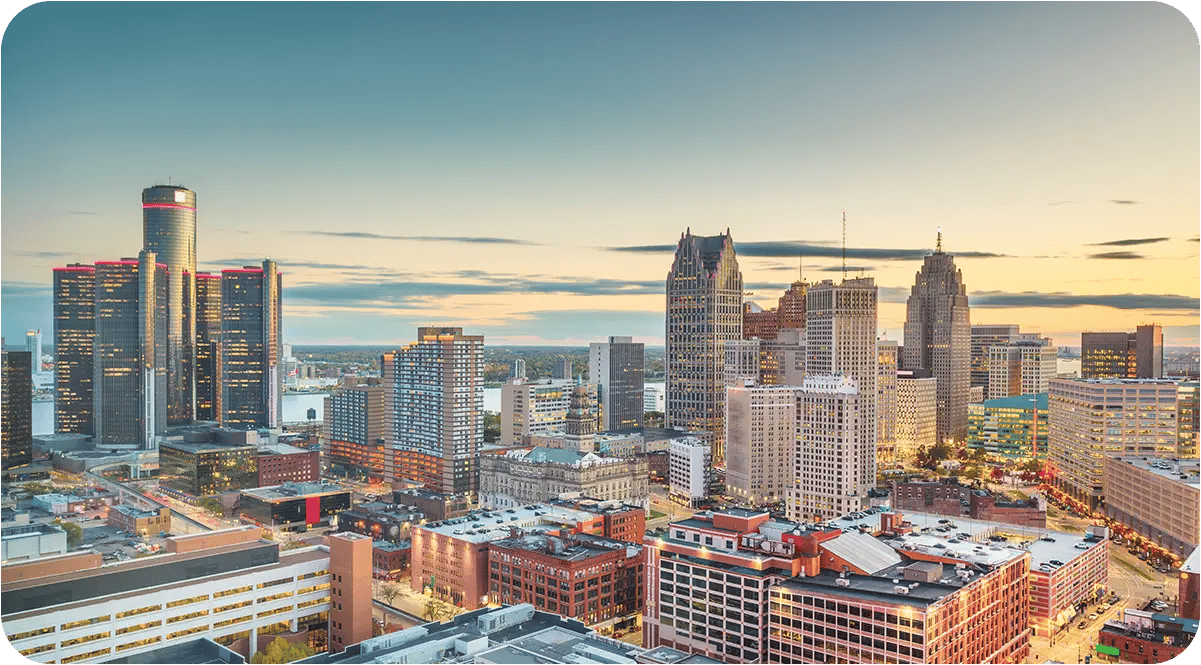
In November 2018 Michigan approved the Regulation and Taxation of Marijuana Act, making cannabis in Michigan legal for adult use. Michigan has generated more than $16 billion in combined cannabis sales and over $2.2 billion in total tax revenue till date. The state's licensed market is regulated by the Cannabis Regulatory Agency (CRA). This page covers the cannabis laws, licensing requirements, and compliance obligations Michigan dispensary operators need to know.
Disclaimer: This page is meant to educate readers and spread awareness only, it is not intended to be, nor should be considered legal advice. This page is current as of May 28, 2026. Given the evolving nature of cannabis regulations, legal advice of any nature should be sought from legal counsel.
Michigan Key Cannabis Laws and Regulations
|
Category |
Key Details |
|
Minimum Purchase Age |
21 for adult-use. Medical patients of any age with a valid CRA registry card may also purchase. |
|
Adult-Use Possession |
Up to 2.5 oz on person and up to 10 oz at home (amounts over 2.5 oz must be in a locked container) |
|
Medical Purchase Limit |
Up to 2.5 oz per day, with a 10 oz monthly cap |
|
Legal Status |
Adult-use legal since 2018 and medical cannabis legal since 2008. |
|
Regulatory Body |
Cannabis Regulatory Agency (CRA), within LARA |
|
Seed-to-Sale Tracking |
Metrc serves as the mandatory statewide infrastructure for all tracking. |
|
Retail Excise Tax |
10% Marihuana Retailers Excise (MRE) Tax (adult-use only) + 6% state sales tax |
|
Wholesale Excise Tax |
24% on first wholesale transfer |
Latest Michigan Cannabis Regulatory Updates
CRA Administrative Rules Overhaul & Public Hearing Update
May 14, 2026 – The Michigan Office of Administrative Hearings and Rules (MOAHR) approved the final draft of the Cannabis Regulatory Agency's (CRA) major rules overhaul, which now moves to the Joint Committee on Administrative Rules (JCAR) for legislative review.
Notably, the CRA removed the controversial draft requirement that would have mandated licensees connect their video surveillance systems to a real-time remote web portal for agency monitoring. The final draft retains rigorous camera and record-keeping mandates while dropping the live portal requirement.
Following the initial approval, the CRA announced it will hold a second public comment period and public hearing. Operators can monitor the JCAR filing and hearing schedule for final implementation dates.
Michigan Supreme Court Orders Review of 24% Cannabis Tax
April 22, 2026 – The Michigan Supreme Court has ordered the state Court of Appeals to review the legality of Michigan’s 24% wholesale cannabis tax, which originally took effect on January 1, 2026, under the Comprehensive Road Funding Tax Act (CRFTA).
This follows an initial lawsuit by the Michigan Cannabis Industry Association (MiCIA) arguing the tax illegally amends a voter-approved initiative without the required three-quarters legislative supermajority vote. MiCIA also filed a second lawsuit claiming the measure acts as a "disguised sales tax" that causes prohibited pyramiding and violates equal protection clauses under both the U.S. and Michigan Constitutions.
Moving forward, the active lawsuits will advance through discovery and appellate court review while the industry continues to grapple with a 40% tax burden. Concurrently, the legislative push to completely repeal the tax via Senate Bill 810 remains pending in committee.
CRA Authorizes State-run Cannabis Reference Laboratory
March 25, 2026 – The Michigan Senate passed Senate Bill 704 in a 34–1 vote, bringing CRA closer to operating a state-run cannabis reference laboratory. This facility will audit private testing facilities, run proficiency testing, and verify product label accuracy to actively combat "lab shopping" and artificial potency inflation. While the lab strengthens state oversight, it is not designed to compete with licensed safety compliance facilities for routine commercial testing. The bill was referred to the House Committee on Regulatory Reform on April 14, 2026, where it remains pending legislative review.
Key Michigan Dispensary Laws and Regulations
|
Compliance Area |
Operator Requirement |
|
Licensing Authority |
Cannabis Regulatory Agency (CRA) issues all licenses, conducts inspections, and takes enforcement actions |
|
Reporting Requirements |
Real-time tracking through Metrc for every individual delivery, package, waste disposal event, and retail sale |
|
Staffing Requirements |
Employee credentialing, background checks, and manual-based training requirements described under Mich. Admin. Code R 420.601 and R 420.602 (covered later in this article) |
|
Location Requirements |
Comprehensive facility location constraints, local municipal zoning rules, and distance buffers described under MCL 333.27956 and local ordinances (covered later in this article) |
|
Security Requirements |
Comprehensive facility security, 24/7 video surveillance, access controls, and storage plans described under Mich. Admin. Code R 420.209 and R 420.208 (covered later in this article) |
|
Packaging And Labeling |
Comprehensive packaging and labeling standards for retail marihuana products described under Mich. Admin. Code R 420.504 (covered later in this article) |
|
Advertising Restrictions |
Comprehensive advertising and marketing requirements described under Michigan Administrative Code R. 420.507 (covered later in this article) |
|
Hemp Compliance |
All intoxicating hemp-derived isomers can only be sold by a state-licensed cannabis retailer and are banned from unregulated retail environments. |
|
License Cap |
No statewide license cap for both individuals and corporate entities. However, municipalities can opt out of retail sales, implement local caps on the number of dispensaries, and allocate limited licenses through competitive scoring systems. |
Michigan Cannabis Dispensary FAQs
Michigan Medical and Recreational Purchase Rules
Who can purchase marijuana in Michigan?
Adults 21 and older may purchase adult-use cannabis from any licensed retailer using a valid government-issued photo ID. Registered medical marijuana patients and designated caregivers of any age with a valid CRA registry card may purchase from licensed provisioning centers or dual-licensed adult-use retailers.
What are the purchase and possession limits for cannabis in Michigan?
Michigan establishes purchase and possession limits for both adult-use consumers and medical patients. In public, adults 21 and older may possess up to 2.5 ounces (70.87 grams) of cannabis flower or its equivalent. At a private residence, individuals can legally store up to 10 ounces of cannabis, provided any amount exceeding 2.5 ounces is kept secured in a locked container.
The following table outlines the purchase limits for cannabis products authorized for retail sale in Michigan, which dispensaries enforce at the point of sale:
|
Product Type |
Per-Transaction Limit |
|
Cannabis flower |
2.5 oz (70.87g) |
|
Cannabis concentrates |
15g |
|
Solid edibles (e.g., gummies) |
40 oz (1,134g) |
|
Liquid edibles and beverages |
90 fl oz (2,661 ml) |
|
Combined purchases |
Mixed products up to 2.5 oz total equivalent |
What are the qualifying medical conditions for a Michigan medical marijuana card?
To obtain a Michigan medical marijuana card, you must be a state resident diagnosed with a qualifying condition by a licensed physician and submit an application and registry fee to the CRA.
Qualifying medical conditions for medical cannabis use include (but not limited to):
- Cancer
- Glaucoma
- HIV Positive
- AIDS
- Hepatitis C
- Amyotrophic Lateral Sclerosis
- Crohn’s Disease
- Agitation of Alzheimer’s Disease
- Nail Patella
- Post - Traumatic Stress Disorder
- Obsessive Compulsive Disorder
- Arthritis
- Rheumatoid Arthritis
- Spinal Cord Injury
- Colitis
- Inflammatory Bowel Disease
- Ulcerative Colitis
- Parkinson’s Disease
- Tourette’s Disease
- Autism
- Chronic Pain
- Cerebral Palsy
Can you legally grow cannabis at home in Michigan?
Yes, adults 21 and older may cultivate up to 12 plants at their private residence for personal use. Plants must be grown in a secure, enclosed space that is not visible from public areas, and is inaccessible to minors.
Medical patients or their designated caregivers may grow up to 12 plants per patient, up to a maximum of 72 plants depending on patient registrations.
What are the rules on public consumption of cannabis in Michigan?
Cannabis consumption is permitted only on private property or within licensed Designated Consumption Establishments. Tenants should consult lease agreements, as landlords may restrict smoking or growing on rental properties.
Public consumption (smoking, vaping, or consuming edibles) in parks, streets, or vehicles is strictly prohibited.
Michigan Dispensary Licensing and Application Process
What state agency is in charge of cannabis licensing in Michigan?
The Cannabis Regulatory Agency (CRA) which comes within the Michigan Department of Licensing and Regulatory Affairs (LARA), is the sole regulatory body for both medical and adult-use cannabis in Michigan. The CRA oversees licensing, enforcement, compliance monitoring, and manages over 2,100 active industry licenses statewide.
What types of cannabis retail licenses are available in Michigan?
The CRA issues the following license categories that dictate what cannabis businesses can cultivate, process, or sell:
|
License Type |
Scope |
|
Adult-Use Retailer |
Sell cannabis products directly to adults 21+. Dual licensees may also serve medical patients. |
|
Provisioning Center (Medical) |
Sell cannabis to registered medical patients and designated caregivers |
|
Designated Consumption Establishment (DCE) |
License on-site consumption for adults 21+. Retail sales are not permitted under this license type. |
|
Class A, B, or C Grower |
Cultivate cannabis for wholesale to other licensees (plant count varies by class) |
|
Processor |
Process cannabis into concentrates, edibles, and other finished products |
|
Safety Compliance Facility |
Conduct state-required laboratory testing of cannabis for potency and contaminants |
|
Secure Transporter |
Move cannabis between licensed facilities |
Where can a marijuana dispensary or retail establishment be located in Michigan?
A dispensary cannot be within 1,000 feet of a K-12 school, though municipalities may reduce or extend this setback. Dispensaries are also prohibited in zones designated exclusively residential. Because individual municipalities retain the right to opt out of adult-use retail entirely, you must secure local zoning approval and municipal authorization before applying for a state license.
What is the process for obtaining an adult-use dispensary license in Michigan?
Michigan uses a two-step application process administered by the Cannabis Regulatory Agency (CRA).
Editor’s Note: Before you apply, confirm your target municipality has opted in to adult-use retail and that your site clears local zoning. CRA will not issue a state license without prior municipal authorization.
- Step 1: Prequalification
The CRA screens the people behind the business before evaluating any facility. All individuals with an ownership interest must submit to background checks, financial disclosures, and state tax compliance verification. You do not need a physical location at this stage. Once approved, prequalification status is valid while you proceed to Step 2.
Find more resources and information about the step 1 of the licensing process.
- Step 2: Establishment License Application
The second step of the process evaluates business specifications, municipal authorization, proof of financial responsibility, and facility compliance through a mandatory pre-licensure inspection. Because physical facilities must pass this inspection within sixty days of submission, operators should only apply when the dispensary is fully built and ready for review. Prospective dispensary owners can consult dispensary setup blueprints to navigate these municipal zoning codes and state security standards.
Editor’s Note: Social Equity Participants can receive a reduced fee but they must apply and be approved before submitting their Step 2 adult-use application.
Find more resources and information about the step 2 of the licensing process.
Additionally, the proposed storefront must be fully prepared to pass a CRA compliance inspection within 60 days of the step-two application submission. If applicable to the license type, the establishment must also pass a Bureau of Fire Services (BFS) plan review and fire safety inspection within the same 60-day window.
After completing all reviews and passing inspections, the applicant must pay the initial licensure fee to receive the active license. Licenses are renewed annually with a renewal fee.
What are the costs of applying for a cannabis adult-use retail license in Michigan?
There are three major license fees that applicants need to pay when applying for a Cannabis Retailer license.
|
Fee |
Cost |
|
Prequalification application fee |
$3,000 (non-refundable) |
|
Adult-use retailer initial licensure fee |
$15,000 |
|
License renewal |
Annual, with fees scaled by market footprint and compliance record |
How do operators qualify for Michigan’s Cannabis Social Equity Program, and what are the fee reductions?
Michigan's Cannabis Regulatory Agency (CRA) provides application and licensing fee discounts to encourage market participation from individuals and communities disproportionately affected by cannabis prohibition. To qualify, approved social equity participants must hold majority ownership (over 50%) of the business entity and meet one or more of the following criteria:
- A 25% fee reduction for applicants residing in a CRA-designated disproportionately impacted community for at least 5 cumulative years within the past 10 years.
- A 25% fee reduction for a past marijuana misdemeanor conviction, or a 40% reduction for a past marijuana felony conviction (excluding offenses involving distribution to a minor).
- A 10% fee reduction for applicants who operated as a registered primary caregiver under the Michigan Medical Marihuana Act for at least two years between 2008 and 2017.
These discounts can be stacked for a maximum of 75% discount on both initial applications and annual licensing renewals. If the dispensary operates within an approved disproportionately impacted community, these fee reductions remain active indefinitely. If operating outside of one, the discounts expire after the first two years of operation.
What are the requirements for Michigan’s Social Equity Grant and All-Star Programs?
Eligible social equity licensees in Michigan have access to two primary state support initiatives, both designed to support long-term business compliance and local community reinvestment:
- Social Equity Grant Program: Backed by a $1 million annual legislative appropriation, this program provides direct grant funding to qualifying adult-use establishments. To be eligible, an entity must:
- hold an active adult-use license
- maintain over 50% social equity participant ownership
- hold an active certification in the All-Star Program
Grant capital must be spent strictly on regulatory compliance needs or community investments (such as verified donations to localized non-profits), with expenditures tracked via mandatory mid-term and final reports to the CRA.
- Social Equity All-Star Program: This initiative publicly recognizes adult-use licensees that implement voluntary diversity, equity, and inclusion initiatives. The CRA awards Bronze, Silver, or Gold tier distinctions to companies that formally publish their internal social equity, corporate spend, and community reinvestment plans on the state portal.
Is there a restriction on how many licenses one entity can hold?
State regulations in Michigan do not cap the number of cannabis retail licenses a single entity or individual can hold, allowing statewide brand expansion.
That said, municipalities can impose strict local caps on the total number of retail licenses permitted within their jurisdictions, limit licenses through competitive scoring systems, or opt out of retail sales completely.
Michigan Recreational Dispensary Operating and Staffing Requirements
What products can be sold in Michigan dispensaries?
Licensed retailers in Michigan can offer cannabis products from the following categories, provided every batch is sourced from a licensed operator, and verified by an approved safety compliance facility:
|
Product Category |
Notes |
|
Cannabis flower |
Dried, unprocessed – weight-based purchase limits apply |
|
Cannabis concentrates |
Oils, wax, shatter, rosin – subject to the 15g per-transaction sublimit |
|
Solid edibles (gummies, etc.) |
Must meet CRA potency limits (10mg THC/serving, 200mg/package for adult-use) |
|
Liquid edibles and beverages |
36 fl oz liquid = 1 oz flower equivalent under MRTMA rules |
|
Vape cartridges |
Must be tested and lab-verified before sale |
|
Topicals and tinctures |
Generally not subject to purchase limits |
|
Pre-rolled products |
Equivalent flower weight limits apply |
|
Seeds and clones |
Permitted for sale to adult-use customers |
|
Intoxicating hemp-derived products (e.g., Delta-8) |
Require a state cannabis retail license. Treated as marijuana under Michigan law since 2021. |
What staffing requirements must Michigan dispensary owners follow?
Unlike states that mandate state-issued worker badges, Michigan places the onboarding, vetting, and compliance burdens directly on the dispensary licensee. Here is a summary of the staffing requirements for Michigan cannabis dispensaries, as laid out in Michigan Administrative Code Rule 420.602.
To work or volunteer at a Michigan cannabis sales location, individuals must be at least 21 years old. Before officially hiring any prospective employee, owners must conduct a thorough criminal history background check.
- Record Retention: Documented results and confirmations of these background checks must be kept for the entire duration of the individual's employment and made immediately available for Cannabis Regulatory Agency (CRA) inspection.
- Disqualifying Offenses: Retailers operating under adult-use regulations are strictly prohibited from employing anyone convicted of distributing a controlled substance to a minor. For medical facilities, a controlled substance-related felony conviction within the past 10 years requires explicit written permission from the CRA before an operator can legally hire them.
Editor’s Note: Dispensary owners are required to implement an internal policy that forces employees to report any new or pending criminal charges, specifically controlled substance offenses, to the CRA.
Dispensary operators must also train employees using a comprehensive training manual and standardized point-of-sale (POS) procedures. These documents must be kept on-site and include:
- Operational workflows that outlined protocols for employee safety, emergency security measures, standard employee guidelines, and handling products.
- Responsible operations plan that explains how employees will monitor and prevent underage access, identify and prevent customer over-intoxication, and stop any illicit distribution or criminal activity on the property.
- Educational and training documentation on cannabis product types, THC/CBD potencies, and proper dosing.
What are Michigan's dispensary security requirements?
Michigan Rule 420.209 mandates a variety of physical security measures that dispensaries must take to stay in compliance. This includes a commercial-grade security system with:
- Non-residential locks on all access points
- A commercial alarm system monitored 24 hours a day
- Continuous 24-hour video surveillance at minimum 720p resolution covering all entryways, sales areas, product storage, and destruction zones
- Surveillance footage retained for at least 30 days and made immediately available to CRA inspectors upon request
The CRA's 2026 administrative rules overhaul removed a controversial draft requirement that would have required live remote access to surveillance feeds via a web portal. The final rules maintain existing camera and record-keeping standards.
What operating hours and location setback requirements must Michigan dispensaries follow?
Michigan has established several baseline location requirements but allows local municipalities to specify operational schedules and zoning laws on a local level.
- Location Requirements: State law mandates a 1,000-foot setback from any existing K-12 school. Individual municipalities have the explicit right to reduce or extend this required distance. Furthermore, dispensaries are strictly prohibited from operating within zones designated exclusively for residential use.
- Operating Hours Requirements: There is no uniform, statewide operating hours for cannabis retailers. Instead, individual municipalities retain full authority to dictate and enforce the permitted hours of operation within their local jurisdictions.
Michigan Cannabis Compliance, Tracking, and Reporting
What seed-to-sale tracking system does Michigan use?
Michigan mandates Metrc as the statewide seed-to-sale tracking system. Every plant, package, and transaction must be logged in Metrc in real time from cultivation through final sale. Integrating your POS with Metrc is mandatory, and failure to maintain accurate records is one of the most cited violations during CRA inspections.
What are the reporting requirements for Michigan dispensaries?
Michigan dispensaries are required to comply with a combination of real-time reporting regulations across financial and operational section codes. Here is a summary of the requirements laid out in Mich Admin Code R 420.203 or R 420.212:
- Licensees must record every cannabis inventory movement, sales transaction, product transfer, and waste disposal event in the state's track-and-trace system in real time.
- Under the Marihuana Tracking Act, retailers must maintain detailed transaction logs capturing the date, time, quantity, and price of every sale. These records must be retained for at least five years and remain immediately accessible for CRA audits.
- Dispensaries are required to reconcile their retail revenue against Metrc inventory logs monthly to catch data entry discrepancies contemporaneously.
- Licensees must submit formalized financial statements (such as the Annual Financial Statement or AFS) to the CRA based on their specific, state-assigned reporting cycles to verify market footprint and compliance integrity.
What taxes are Michigan cannabis retailers required to collect and remit?
Michigan cannabis retailers have three different tax layers to contend with:
|
Tax Type |
Rate |
Legal Obligation and Collection Method |
|
Marihuana Retailers Excise (MRE) Tax |
10% |
Retailer collects at point of sale on adult-use transactions, remitted monthly to Michigan Treasury |
|
State Sales Tax |
6% |
Retailer collects at point of sale on all taxable transactions, remitted monthly |
|
Wholesale Excise Tax (CRFTA) |
24% |
Cultivator or processor pays on first wholesale transfer, commonly passed through to retailers via contract |
What packaging and labeling requirements apply?
Michigan’s packaging and labeling mandates are codified under two primary administrative rule sets managed by the Cannabis Regulatory Agency (CRA): Mich. Admin. Code R. 420.504 and R. 420.403. Here are the combined packaging and labeling requirements as specified in the rules:
- Containers must be child-resistant, tamper-evident, and opaque.
- Multi-serving products require resealable packaging that maintains its child-resistant effectiveness over time.
- Adult-use edibles are capped at 10mg THC per serving and 200mg per package, while medical edibles are capped at 50mg per serving and 500mg per package.
- Edible products are restricted to basic geometric shapes and cannot resemble humans, animals, fruit, or commercial candy brands.
- Labels must prominently feature the CRA universal symbol, explicit THC/CBD content, and the track-and-trace batch number.
- Labels must include the testing laboratory's name, the formal analysis date, and the product activation time.
- Packaging must display mandatory health disclosures, an outlined pregnancy warning block, and the Poison Control hotline number.
- Dispensaries must place all final purchases into an opaque, child-resistant exit bag before the customer leaves the retail area.
Michigan Consumption Lounge Licensing Requirements
Can you open a cannabis consumption lounge in Michigan?
Yes. Michigan offers a Designated Consumption Establishment (DCE) license, which authorizes on-site cannabis consumption for adults 21 and older. A DCE license does not permit retail sales, so customers must bring their own legally purchased products. Dispensaries will generally operate a consumption lounge adjacent to a licensed retail storefront, enabling purchase and consumption in a compliant environment.
How do you obtain a consumption lounge license in Michigan?
Obtaining a DCE license requires local municipality approval and zoning clearance before submitting a two-step state application to the CRA. Licensees must comply with:
- Strict physical separation between any retail and consumption areas
- Commercial ventilation and air filtration standards
- Comprehensive security monitoring covering all consumption areas
- Active staff supervision of all on-premises consumption
- No alcohol sales or consumption on the premises
Can licensed retailers deliver cannabis to a consumption lounge in Michigan?
Yes. Licensed adult-use retailers may deliver cannabis products directly to customers located at a licensed Designated Consumption Establishment.
Michigan Cannabis Market Outlook
Michigan's licensed cannabis market continues to demonstrate remarkable scale, having scaled to over $16 billion in less than a decade. Despite the new 24 percent wholesale tax, fluctuating prices, and a highly competitive field of over 2,100 active licenses, demand has held relatively steady. In fact, April 2026 saw sales of approximately $258.6 million, bringing the year-to-date 2026 total to roughly $1 billion already.
Based on this growth, here are some key developments to watch in 2026:
- Wholesale Tax Impact and Litigation: The 24% wholesale excise tax took effect at the start of 2026, driving January sales to their lowest monthly level since late 2022. Active lawsuits from MiCIA challenging the tax on constitutional grounds are proceeding through the Court of Claims. SB 810, with bipartisan support, is in committee, though repeal faces a steep political climb.
- Market Consolidation: 2025 saw the first year-over-year decline in active Michigan cannabis licenses. As this trend continues into 2026, we can expect to see margin compression force closures and consolidation among smaller operators.
- CRA Reference Laboratory: Senate Bill 704's passage signals growing institutional investment in testing integrity, which should level the playing field for operators who already invest in rigorous quality control.
- Federal Rescheduling and Section 280E: The April 2026 federal rescheduling order shifted state-licensed medical cannabis to Schedule III, eliminating Section 280E tax restrictions for medical provisioning centers. However, adult-use retail remains under Schedule I and subject to 280E, creating distinct structural advantages for medical operations.
- Federal Hemp Restrictions: Enacted in late 2025 and taking effect on November 12, 2026, P.L. 119-37 establishes a strict 0.4mg total THC per container cap, effectively outlawing psychoactive hemp-derived cannabinoids outside of state-licensed dispensaries.
Operators who invest in compliance infrastructure, efficient inventory and POS systems, and differentiated customer experiences are best positioned for the road ahead. Understand where cannabis is legal in North America in 2026 to see how Michigan ranks against neighboring jurisdictions.
Additional Resources
Dive deeper into everything related to cannabis retail in and around Michigan with these curated resources.
- Where Is Cannabis Legal in North America in 2026?
- How to Open a Dispensary: Step by Step Guide to Getting Started
- Certified Dispensary POS & Inventory Management System for Michigan
- How to Open a Dispensary in Michigan
- How to Choose a Seed-to-Sale Compliant POS for Your Michigan Dispensary
- How to Apply for a Cannabis Retail License in Michigan
- Cannabis Social Equity Rules in Michigan
- Licensing, Rules, and Compliance Resources | Michigan Cannabis Regulatory Agency (CRA)
- Michigan Cannabis Employee Background Check Requirements | CRA
- Search Active Michigan Cannabis Licenses | CRA Licensed Facilities Dashboard
- Michigan Cannabis Rules – Mich. Admin. Code R. 420.1 – 420.1004 | Administrative Ruleset
- Approved Seed-to-sale Software Providers | Metrc Michigan Validated Integrators
Get the Latest Updates from Cova
Get updates & insights on cannabis retail regulations, trends, and technology.