
Texas Cannabis Laws
Discover the latest hemp and cannabis laws in Texas, learn about dispensary licensing regulations, eligibility criteria, how to apply, and more.
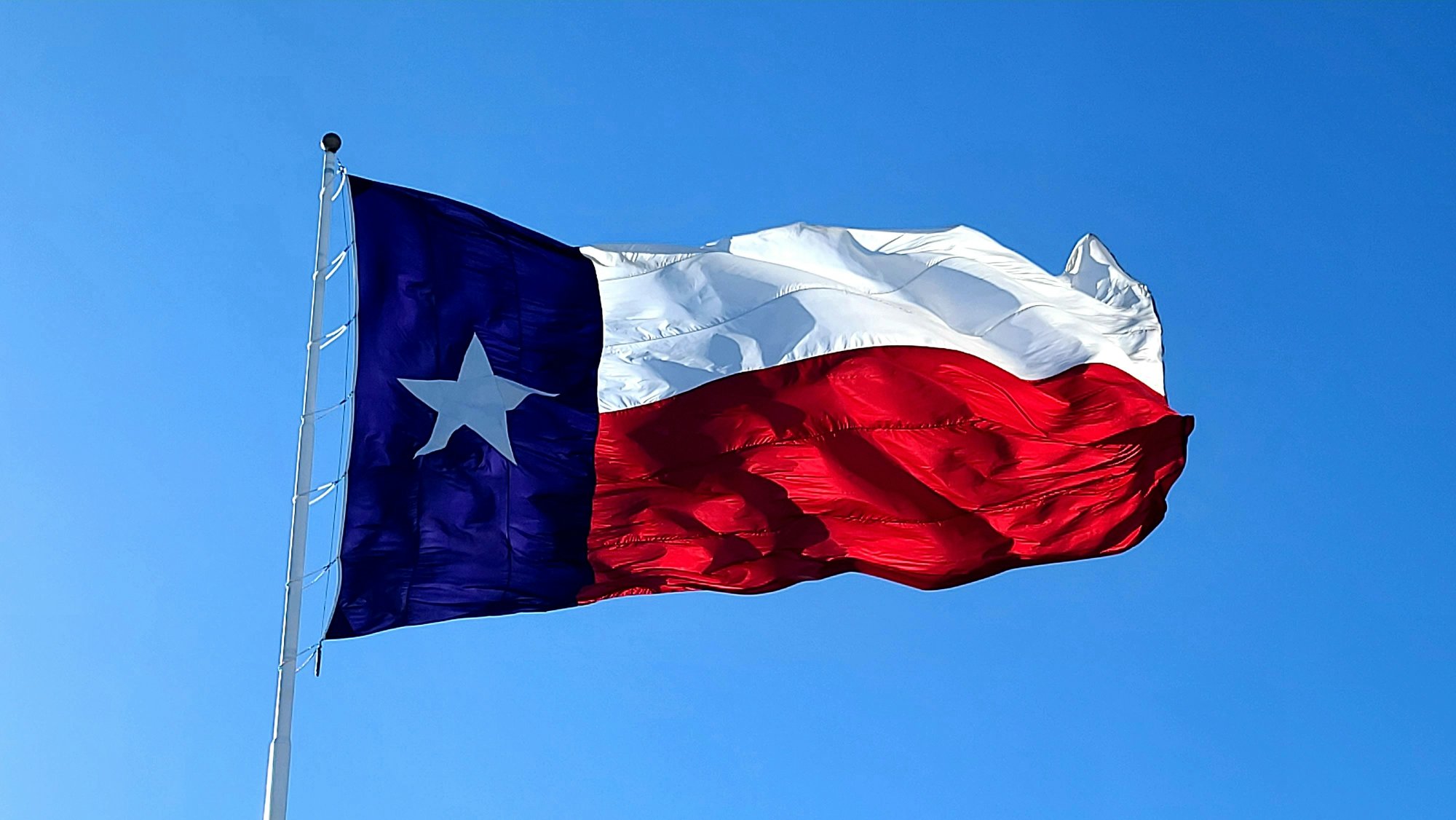
Texas legalized hemp in 2019 and in the five years since, Delta-8 gummies, THCA flower, and CBD vapes have filled shelves at gas stations and smoke shops across the state with minimal oversight. That all may change very soon.
Even though adult-use recreational marijuana remains strictly prohibited in Texas, the state’s hemp industry has exploded into a multi-billion dollar sector. As of May 2026, a complicated legal battle is unfolding between state agencies and the industry regarding "intoxicating hemp" and new barriers to entry.
To help you navigate this complex and rapidly evolving market, we have developed a comprehensive guide for entrepreneurs looking to open a CBD or hemp business in the Lone Star State, covering the latest 2026 DSHS regulations, licensing fee hikes, and the ongoing court battles.
Disclaimer: This page is meant to educate readers and spread awareness only, it is not intended to be, nor should be considered legal advice. This page is current as of May 12, 2026. Given the evolving nature of cannabis regulations, legal advice of any nature should be sought from legal counsel.
Texas Key Cannabis Laws and Regulations
|
Category |
Key Details |
|
Minimum Purchase Age |
All customers must be at least 21 years old to purchase any consumable hemp product, including non-intoxicating CBD oils and gummies, as per DSHS rules effective March 31, 2026. |
|
Adult-Use Possession |
Possession of legal hemp is currently unlimited provided the product contains no more than 0.3% THC. However, recreational marijuana remains strictly illegal. |
|
Medical Purchase Limit |
Qualified patients registered under the Texas Compassionate Use Program (TCUP) can purchase medical cannabis from licensed dispensing organizations. |
|
Home Cultivation |
Individual home cultivation of marijuana is strictly prohibited. Individuals wishing to grow hemp must obtain a Hemp Producer License from the TDA. |
|
Recreational Use |
Recreational marijuana is illegal in Texas. While several cities including Austin, Dallas, and Denton voted to decriminalize small amounts of marijuana, Texas courts struck them, arguing that local ordinances cannot override state drug laws. |
|
Consumption Areas |
Public consumption of marijuana is prohibited statewide. Hemp and marijuana consumption must be limited to private property. |
|
Regulatory Body |
Consumable hemp products are regulated by the Texas Department of State Health Services (DSHS). The Texas Department of Agriculture (TDA) oversees hemp cultivation, while the Department of Public Safety (DPS) manages the medical program. The Texas Alcoholic Beverage Commission (TABC) is now the primary agency for inspecting age-compliance at retail locations. |
|
Seed-to-Sale Tracking |
Texas does not currently use a state-mandated seed-to-sale tracking system for the hemp market. Instead, retailers bear the burden of proof and must maintain their own records of invoices and lab-verified Certificates of Analysis (COAs) for at least three years. |
Latest Texas Cannabis Regulatory Updates
Smokable Hemp Protected by Court Injunction – But Still Under Appeal
On March 31, 2026, Texas DSHS implemented a sweeping "Total THC" rule (including THCA) that effectively banned smokable hemp statewide. A Travis County judge initially blocked it with a Temporary Restraining Order on April 10.
After a three-day evidentiary hearing (April 28–30), Judge Daniella DeSeta Lyttle extended the TRO into a stronger temporary injunction on May 1, 2026, blocking the following statewide:
- Total THC standard
- massive fee hikes
- transport restrictions
- escalating daily penalties
Consumer-safety rules (child-resistant packaging, 21+ age requirement, labeling) remain in effect.
The state immediately appealed, briefly reinstating the ban on May 7 before the Texas 15th Court of Appeals granted an emergency motion on May 8 to reinstate the injunction – smokable hemp is back on shelves. A hearing at the 15th Court of Appeals is scheduled for May 17, 2026, with a full trial set for July 27, 2026.
Separately, the Texas Supreme Court ruled on May 1 that DSHS has broad authority to classify manufactured Delta-8 THC as a controlled substance (Hometown Hero v. DSHS), effectively banning Delta-8 products while leaving THCA flower unaffected by that ruling.
On the federal horizon, a November 12, 2026 deadline will apply a federal total THC standard that would impact smokable hemp and high-THCA products nationwide.
Texas Cannabis & Hemp Dispensary FAQs
Texas Medical and Recreational Purchase Rules
An overview of the current marijuana and hemp-derived consumable laws in Texas as of 2026.
Are CBD, Delta-8, and Delta-9 THC products still legal in Texas?
Delta-8 and Delta-9 vapes are banned with Senate Bill 2024 which prohibits the retail sale of any vape product containing cannabinoids, regardless of whether the cannabinoid is hemp-derived.
Manufactured Delta-8 products (where CBD is chemically converted into Delta-8) are now effectively banned. The Texas Supreme Court ruled on May 1, 2026 (Hometown Hero v. DSHS) that DSHS has authority to classify manufactured Delta-8 as a Schedule I controlled substance, removing the injunction that had previously allowed these products. Trace amounts of naturally occurring Delta-8 in compliant hemp remain legal.
Hemp-derived Delta-9 THC edibles, gummies, tinctures, oils, and capsules remain legal for adults 21 and older, provided the product does not exceed 0.3% Total THC.
THCA flower and smokable hemp products are currently permitted under a statewide temporary injunction that blocks DSHS enforcement of the Total THC rule against smokable products. However, the state's appeal is pending a hearing at the 15th Court of Appeals on May 17, 2026, so the legal status of smokable hemp may still change..
Who can buy hemp products in Texas?
Only adults aged 21 and older with a valid government-issued ID can purchase consumable hemp products. This includes everything from CBD oil to hemp-infused beverages.
What is the Texas Compassionate Use Program (TCUP) and who qualifies?
Texas Compassionate Use Program (TCUP) is the state’s limited medical cannabis program. It allows licensed physicians to prescribe low-THC cannabis oil to patients with qualifying conditions. Texas does not issue medical marijuana cards – the prescription is entered directly into the Compassionate Use Registry of Texas (CURT) by the physician.
Following House Bill 46 (signed June 2025), the program was significantly expanded. Qualifying conditions now include:
- Epilepsy and seizure disorders
- Cancer (all forms)
- PTSD
- Chronic pain
- Crohn's disease
- ALS, MS, and other neurodegenerative diseases
- Autism
- Traumatic brain injury (TBI)
- Terminal illness
- Spasticity
As of 2026, the state is expanding from three original licensees toward up to 15 dispensing organizations statewide.
Retail Cannabis & Hemp Licensing in Texas
Everything you need to know about opening a hemp or CBD retail location in Texas.
What licenses are required to sell hemp-derived products in Texas?
Potential operators can apply for a hemp license online at the DSHS website. Under the March 2026 rules, there are currently two licenses available:
- A DSHS Retail Hemp Registration for retailers with an annual fee of $5,150 per location (previously $155).
- A DSHS Manufacturer/Processor License for Manufacturers and Processors with an annual fee of $10,300 per facility (previously $258).
A single license is only an application for one physical location/facility.
Editor’s Note: Both fee tiers are part of the ongoing April 2026 litigation. Monitor dshs.texas.gov for updates as the court proceedings progress.
What is the licensing process for getting a Retail Hemp Registration in Texas?
Here is what retail operators need to do, per DSHS's consumable hemp program:
- Confirm Eligibility: You cannot hold a registration if you owe outstanding fees to DSHS, or if you have been convicted of a felony related to a controlled substance within the past 10 years.
- Apply Online: Registrations are submitted through the DSHS Business and Professional Licenses portal. Each physical retail location requires its own registration. DSHS allows a single registrant to cover multiple locations under one filing.
- Prepare Required Documents: The application requires a legal description of your property and its GPS/GIS coordinates, a property owner consent letter, and the applicable registration fee of $5,150 per location.
- Re-apply Annually: Unlike retail licenses in other states, the registrations in Texas expire after one year and must be renewed. DSHS may inspect registered locations at any time, with or without advance notice.
For the full checklist, see the DSHS Consumable Hemp Product License Checklist (PDF).
Are there location restrictions for hemp retail stores in Texas?
No statewide buffer zone requirement exists for hemp retail. However, local municipalities have their own zoning ordinances, and enforcement priorities vary significantly by city. Confirm zoning requirements with your local planning office before signing a commercial lease.
What state agency oversees hemp retail licensing in Texas?
Three state agencies share overseeing hemp retail licensing and operations in Texas:
- The Texas Department of State Health Services (DSHS) issues retail registrations and sets compliance standards for consumable hemp products.
- The Texas Alcoholic Beverage Commission (TABC) has been granted co-enforcement authority and may conduct on-site inspections.
- The Texas Department of Agriculture (TDA) handles licensing for hemp cultivation.
Texas Dispensary Laws
Learn how to remain compliant with Texas cannabis & hemp retail laws.
What hemp-derived products can currently be sold in Texas retail stores?
Currently permitted (21+ only):
- CBD tinctures and oils (≤0.3% Total THC)
- Hemp capsules, softgels, and tablets
- CBD topicals and creams
- Hemp-derived Delta-9 THC gummies and edibles (compliant THC levels)
- Hemp-derived beverages
- Hemp flower, THCA flower, and pre-rolls (permitted pending outcome of May 17 hearing)
What are the packing and labeling requirements for a hemp retailer in Texas?
Under 25 TAC §300.405, all consumable hemp products must be sold in packaging that is tamper-evident, child-resistant, and resealable (if the product contains multiple servings).
Labels on the outer packaging (25 TAC §300.402) must include the:
- product name
- batch number and date
- manufacturer name and contact information
- serving size in milligrams
- a URL linking directly to the product's COA in three or fewer clicks
Additionally, five mandatory warnings must also appear:
- the product should be kept out of reach of children
- it may cause a failed drug test
- all THCs have psychoactive properties
- pregnant or nursing women should consult a physician
- the product has not been FDA evaluated.
Finally, packaging design is also regulated (25 TAC §300.407). Any artwork, statement, or design that implies the product does not contain cannabinoids – or that it has a medical use – is prohibited.
What taxes apply to hemp product sales in Texas?
Hemp products are subject to the standard Texas state sales tax of 6.25%, plus local taxes up to 2%, for a combined rate of up to 8.25% in most Texas cities. There is no hemp-specific excise tax.
Conclusion
In 2025, Texas Governor Abbott vetoed a complete ban on hemp, choosing regulation over prohibition, but the lawmakers failed to agree on a regulatory framework. Governor Abbott then directed state agencies to act and the Texas Department of State Health Services (DSHS) issued sweeping new rules effective March 31, 2026.
The new rules ban cannabinoid vapes outright, effectively eliminate smokable hemp by a new Total THC testing standard, increase licensing fees by more than 3,000%, and mandate a hard 21+ age requirement statewide. And yet things aren’t set in stone just yet.
As the legal battle over smokable hemp continues in Travis County, staying informed is your best move for staying ahead. Subscribe to the Cova newsletter for real-time updates on Texas regulations and the technology you need to stay compliant.
Additional Resources
- Where Is Cannabis Legal in North America in 2026?
- Texas Hemp Laws 2025: CBD License & Retailer Compliance
- Cannabis Dispensary Compliance Guide
- Certified Dispensary POS & Inventory Management System for Texas
- The Best POS Systems for Texas Hemp THC & CBD Stores
- Texas CBD and Hemp THC Retail Opportunities: Preparing for What’s Next
- Texas DPS – TCUP Licensing and Registration
- Texas DPS – TCUP Laws and Regulations
- Texas Health & Safety Code, Chapter 487 – Compassionate-Use Act
- Texas State Law Library – Cannabis & the Law Guide
- Texas State Law Library – Hemp
- NORML – Texas Laws and Penalties
- Marijuana Policy Project – Texas
Get the Latest Updates from Cova
Get updates & insights on cannabis retail regulations, trends, and technology.