
If you’ve been in the cannabis retail game for a while, you know flower has long reigned supreme. But with more legal markets opening and new, more diverse consumers coming to the table, different cannabis product categories are quickly gaining market share. As a dispensary operator, it's crucial to keep ahead of these changing trends so you can offer customers what they’re looking for.
So: What are the most popular kinds of cannabis products to keep in stock? In this guide, we’ll break it all down – including the best-selling and fastest-growing cannabis product categories based on the latest data, market trends, and dispensary-level insights, so you can make informed inventory decisions and build a product mix that satisfies a wide range of customers.
What Are the Most Popular Kinds of Cannabis Products?
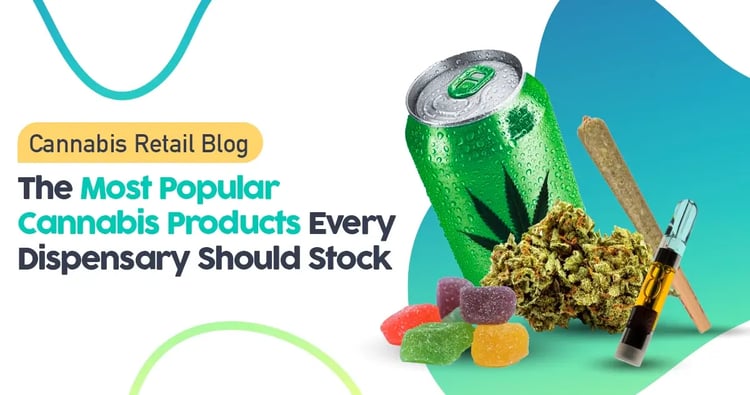
The most popular kinds of cannabis products sold in modern dispensaries are (based on 2024 sales figures):
- Flower (40%)
- Pre-rolls (16%)
- Vapes (22%)
- Edibles (14%)
- Concentrates (7%)
- Beverages (1%)
Each of these product types plays a unique role in the cannabis retail environment, offering multiple ways to serve different consumer needs. Below are more in-depth sales insights and trends by cannabis product type.
|
Year |
Flower |
Pre-Rolls |
Vapes |
Edibles |
Concentrates |
Beverages |
|
2022 |
45% |
11% |
20% |
13% |
10% |
<1% |
|
2023 |
42% |
13% |
21% |
14% |
8% |
1% |
|
2024 |
40% |
16% |
22% |
14% |
7% |
1% |
Data sources: Headset, MJBizDaily, Würk
Top-selling Cannabis Product Insights
Flower Remains King
Flower remains the most dominant product category by a wide margin, but its market share has slowly declined as consumer preferences have shifted toward more ready-to-use and discreet products like pre-rolls and vapes. According to MJBizDaily, up to 60% of cannabis dispensary sales typically come from flower and pre-rolls.
Pre-Rolls Are Booming
As the fastest-growing cannabis product category, pre-rolls saw an 11.9% revenue bump between 2023 and 2024. What’s behind the surge? Convenience, multi-pack options, and premium infused products, especially among new and younger users. Pre-rolls are so popular in Canada that they nearly overtook flower sales in 2024, and actually led sales between May and October.
Vapes Gain Ground
Vape cartridges and pens – beloved as a clean, discreet, and portable way to consume cannabis – are popular across all major markets, particularly among younger consumers. The U.S. vape market was valued at $5 billion in 2023 and accounted for up to 25% of retail sales in dispensaries across the country. Pod-based systems and potent oils outperform older formats, especially in mature markets. As regulations tighten and testing improves, consumer confidence grows, keeping vape sales rising 5%-8% year-over-year, despite growing price sensitivity.
Edibles Chew Up Market Share
Edibles hold their ground with 13%-20% of total sales. Gummies continue to dominate the edible subcategory, followed by chocolates and cookies. The appeal of consistent dosing, attractive packaging, and innovative flavors contribute to the segment’s 8% year-over-year growth.
Beverages & Concentrates: Small but Mighty Movers
Concentrates (3%-7%) and cannabis drinks (less than 1%) may have the smallest slices of the pie, but they’re growing fast. Concentrates attract seasoned customers chasing potency, while beverages are catching on with curious newcomers. From Q2 2023 to Q2 2024, cannabis drink sales jumped 8%, thanks to microdose formats and ready-to-drink packaging. These categories are still niche – but they’re heating up.
CBD Products
CBD occupies a unique spot in the cannabis market, overlapping wellness, health, and non-intoxicating recreational use. Market growth for CBD products continues in mainstream retail, and forecasts predict a global CBD market value of $8.9 billion by 2034.
Best-selling Cannabis Products by Region
United States
|
State |
Flower |
Pre-Rolls |
Vape |
Edibles |
Concentrates |
Other* |
|
NY (2025) |
35% |
17% |
27% |
12% |
9% |
<1% |
|
MI (2024) |
47% |
19% |
18% |
12% |
4% |
<1% |
|
MO (2024) |
49% |
17% |
14% |
15% |
4% |
1% |
|
CO (2023) |
44% |
19% |
21% |
12% |
3% |
1% |
|
MT (2024) |
44% |
21% |
14% |
17% |
3% |
1% |
|
MN (2024) |
62% |
12% |
10% |
13% |
2% |
1% |
|
OK (2024) |
41% |
15% |
22% |
17% |
4% |
1% |
|
CA (2024) |
41% |
17% |
24% |
14% |
4% |
<1% |
|
ME (2024) |
52% |
14% |
11% |
18% |
4% |
1% |
|
MS (2024) |
64% |
7% |
10% |
15% |
2% |
2% |
Data sources: Cannabis Business Times, Green Blazer, City of Los Angeles Department of Cannabis Regulation, Statista, Lookah, Headset
*Includes beverages, topicals, tinctures, capsules, and other less common forms like transdermal patches and suppositories.
California
Flower still leads in California, holding around 45% of market share. But vape cartridges (21%) and edibles (13%) are making gains as consumers seek discretion, wellness, and variety. California’s competitive landscape supports lower prices and more product innovation, with infused pre-rolls and multi-packs trending sharply upward.
Colorado
Colorado’s mature market supports experienced users who demand performance. Flower leads, but concentrates – despite being under 5% of market share – remain essential due to their potency and fast onset. Vape pens and high-THC edibles also perform well in this adventurous market.
Missouri
As a newer recreational market, Missouri sees flower dominating with over 65% of sales. But pre-rolls and infused vapes are catching fire, boosted by competitive pricing and growing brand presence. Expect strong growth in gummies and beverages as consumer education improves.
Montana
Like other states, Montana leans heavily on flower, the most accessible and affordable format for first-time users. The market is still early-stage, but pre-rolls and edibles are likely to gain traction as consumers become more comfortable with alternative options.
New York
Flower remains strong in New York’s young adult-use program, but pre-rolls – especially multi-packs and infused options – are the breakout category. Urban consumers are also driving early interest in vapes and edibles, echoing trends seen in more mature markets.
Illinois & Massachusetts
Both states are seeing flower fall below 50% as vape pens and edibles gain share. Pre-rolls are now the second-largest category, driven by consumer desire for convenience and dosing consistency. In Massachusetts, gummies dominate the edibles market, aligning with wellness and sleep-focused use cases.
Canada
|
Province |
Flower |
Pre-Rolls |
Vape |
Edibles |
Concentrates |
Other |
|
Ontario |
38% |
32% |
18% |
8% |
2% |
2% |
|
BC |
41% |
29% |
19% |
7% |
2% |
2% |
|
Alberta |
39% |
31% |
19% |
8% |
2% |
1% |
|
Quebec |
42% |
26% |
16% |
14% |
1% |
1% |
|
Manitoba |
38% |
32% |
20% |
7% |
2% |
1% |
Data sources: Cannabis Business Times, Green Blazer, City of Los Angeles Department of Cannabis Regulation, Statista, Lookah, Headset
Ontario
As Canada’s largest market, Ontario leads in product diversity and innovation. Multi-pack pre-rolls and high-potency vape oils are key movers; edibles are growing, but remain a smaller slice of the pie.
British Columbia
B.C. still sees strong flower sales but is also a top market for CBD tinctures, capsules, and oils. The province’s wellness-oriented consumers trust Health Canada’s regulations and often prefer non-smokable, low-dose products – a trend driven by older, health-focused demographics.
Alberta
Alberta is a fast-growing market for pre-rolls and vapes, especially infused and high-potency products. Flower remains strong, but consumer curiosity is pushing demand for convenient and discreet formats, often priced competitively due to high retailer density.
Quebec
Quebec stands apart with higher-than-average edible sales, particularly in gummies and chocolates. Flower still leads overall, but Health Canada’s flavor restrictions on vapes and edibles have led to more refined, wellness-forward product selections.
Urban Hubs: Toronto & Vancouver
In cities like Toronto and Vancouver, low-dose beverages, gummies, and dissolvable strips are on the rise. Smoke-free, discreet formats resonate strongly in multi-unit housing markets and among health-conscious buyers. While these categories are small in total share, they are growing quickly.
What Cova’s Data Reveals
As the cannabis industry’s leading point-of-sale platform, Cova has unique insight into which products are really moving in dispensaries. Across Canada, our clients sold $86.5 million in flower over a 30-day period, compared to $49.5 million in concentrates, $8.4 million in edibles, and $2.8 million in oil. In the U.S., our clients saw $25.6 million in flower sales over the same 30-day period, compared to $15.8 in concentrates, and $4.9 million in edibles.
Factors Influencing Cannabis Consumer Choice
When consumers walk into a dispensary, their buying decisions are shaped by a blend of personal preference, budget, and product education. Here are the key factors influencing which cannabis products they choose:
Price Sensitivity
Price remains a major factor, especially in markets with wide economic disparities or high taxation. Some customers look for the best deal – often comparing grams-per-dollar or THC-per-dollar metrics – while others are willing to pay a premium for artisanal products, rare genetics, or solventless extracts. Stocking products at multiple price points ensures accessibility without alienating high-end shoppers.
Potency and Cannabinoid Profile
Many consumers, especially experienced users, select products based on THC and CBD content. Some seek the highest THC percentage available, while others prefer balanced ratios for functional or medical use. Cannabinoids like CBG and CBN are also influencing decisions as consumers become more educated on their effects.
Brand Recognition and Packaging
Effective branding can significantly sway purchasing decisions. Sleek, compliant packaging and clear messaging about effects, dosage, and ingredients make products easier to trust, especially for newer consumers. National and regional brands with strong reputations often drive repeat sales.
Desired Effects
Customers frequently shop based on how they want to feel: relaxed, uplifted, focused, sleepy, or pain-free. Retailers that organize inventory by effect – and train staff to guide customers accordingly – can increase satisfaction as well as basket size. Terpene profiles and minor cannabinoids are increasingly part of the conversation around expected outcomes.
Consumption Method
Some people don’t like to smoke; others won’t eat edibles because they take too long to kick in. Time of day, activity level, and social setting can all impact which product format someone might prefer. Offering a diverse range of products allows your dispensary to meet the moment, whether it’s a wake-and-bake sativa or a discreet vape for commuting.
How Dispensary Owners Can Optimize Inventory
Running an efficient and profitable dispensary depends on more than just stocking bestsellers. It’s about understanding your customers, managing turnover, and leveraging data. Here are some actionable strategies to consider in your dispensary operation.
Use Sales Data to Inform Ordering
Your dispensary point-of-sale (POS) system should tell you what’s flying off the shelves – and what’s gathering dust. With advanced reporting features, dispensary owners can monitor real-time sales by product, category, time of day, and customer profile. This data is invaluable for fine-tuning your product mix, forecasting demand, and negotiating better wholesale prices.
Diversify Product Categories
Don’t rely solely on flower. Consumers have wide-ranging needs and preferences, and your inventory should reflect that. Stocking a mix of edibles, vapes, topicals, and concentrates ensures you have something for every type of customer – from the canna-curious to the seasoned dabber.
Another easy way to increase cart sizes is to stock accessories like lighters, rolling papers, pipes, grinders, trays, and similar cannabis paraphernalia. While they typically represent only 1-2% of dispensary sales, they’re a consistent source of revenue and can even outpace niche categories like infused topicals and tinctures on peak retail days like 4/20.
Stock CBD Products Strategically
CBD products attract wellness-seekers, older adults, and new cannabis users. But overcommitting inventory to niche or slow-moving SKUs can tie up cash flow. Start with top-selling formats like gummies, tinctures, and topicals, and adjust based on local demand.
Plan for Seasonality and Events
Cannabis sales are seasonal. Holidays like 4/20 and Green Wednesday can drive massive traffic, while summer months often show dips in certain categories. Use historical sales data and tools like our 4/20 Retail Guide to plan promotions, staffing, and inventory accordingly.
Follow Standard Operating Procedures
Proper SOPs help reduce shrinkage, maintain compliance, and improve customer experience. From receiving and labeling to cycle counting and returns, having clear processes in place helps ensure smooth operations. Take a look at our dispensary standard operating procedure templates to start optimizing your workflow.
The Takeaway
The most popular cannabis products remain familiar – flower, pre-rolls, vapes, edibles – but the way consumers shop and the options they expect are continually evolving. Concentrates and topicals are gaining market share, and CBD products are more relevant than ever. By staying in tune with regional trends, understanding your customers’ motivations, and using real-time data to guide your decisions, you can build a product assortment that’s profitable, compliant, and compelling.