
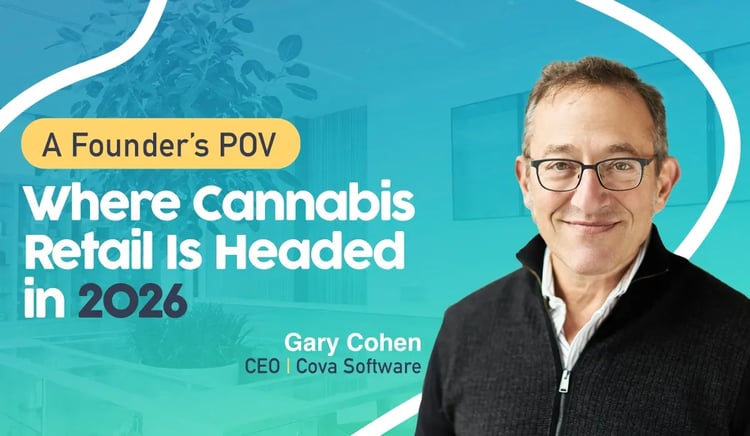
I’ve been in the cannabis industry for about nine years now. In that time, I’ve been deeply involved in the day-to-day reality of this business — talking with retailers, operators, tech partners, and yes, even competitors, almost every single day.
When you’re that close to the ground, patterns start to show themselves early. You hear what’s working, what’s breaking, and where people are quietly adjusting long before it shows up in headlines or reports.
After a dismal, business-wrecking 2024, the cannabis industry finally saw a noticeable upswing in 2025 — and it felt different this time.
Optimism returned not because of hype, but because the supply chain was left with stronger players. These were operators who managed expenses better, avoided drastic discounting, and started to see real margin improvements. Investors noticed the shift and voted with their wallets, which showed up clearly in increased M&A activity.
Retail led the recovery
Retail saw the most movement across the board:
- 1–2 store operators added locations simply by taking over existing leases
- 5–10 store chains expanded into prime or strategically important locations
- SSOs and MSOs raised capital to acquire other multi-store operators
I expect this consolidation to continue into 2026. But beyond that, there are a few important dynamics that are becoming clearer the more conversations I have.
What I’m Seeing for 2026
Fewer dispensaries will fail
Most of the bloodletting already happened over the past three years. Weak operators and terrible locations were largely eliminated.
At this point, most states and provinces are mature markets. The dispensaries that remain have brand awareness, a customer base, and more efficient operations. Because of that, far fewer retailers will simply fail and disappear going forward.
“Discount cannabis” stops being a growth strategy
For a while, being the cheapest option — lowest margins, minimal service, limited selection — worked as a differentiator.
That advantage has mostly disappeared.
Nearly every retailer now carries some discount products alongside better curation and improved service. For all but a small segment of customers, the full-service dispensary experience is more compelling.
Better rent and lease terms
This is a big one, and it’s been a long time coming.
Cannabis retailers have finally shed the reputation of being “bad tenants.” Over the years, dispensaries have proven they are not dangerous, not harmful to children, not magnets for crime, and not delinquent on rent.
Even more importantly, their customers spend money at neighboring businesses, and many dispensaries have become real parts of their communities. Because of that, there are far more landlords willing to lease to cannabis retailers today than there were five or ten years ago.
Margins should continue to improve
Less discounting and more efficient operations — better scheduling, inventory management, and reporting — naturally lead to healthier profits.
If rescheduling moves forward and 280E is eliminated, the bottom line improves even more. That would be meaningful for everyone in the industry.
What I’d Focus on as an Operator in 2026
Merchandise by mood and effect
We’ve all heard the shift away from purely high-THC products, and it’s real.
More retailers are organizing their stores around lifestyle, mood, or effect instead of just ingestion type. That approach makes it easier for customers to find what they’re actually looking for — and it aligns better with how people think about cannabis today.
Maintain — or raise — service levels
One thing I hear constantly from retailers: customers will travel farther for a store with the right vibe and great service.
Not every customer wants the same interaction, but everyone wants to feel noticed, respected, assisted, and thanked. Treating every customer like a guest in your house is still one of the strongest differentiators in retail.
Make purchase recommendations smarter
Budtenders are smart, and some know products extremely well — but most can’t keep up with everything.
The average store now carries around 600 SKUs, and that list is always changing. Any tool that helps budtenders confidently recommend the right product is worth investing in. Better recommendations lead to better experiences and better outcomes for everyone.
Celebrity brands are fading fast
Seven years ago, A-listers rushed into cannabis, eager to be part of the green wave. Big names like Willie Nelson and Mike Tyson launched their own marijuana brands, and hundreds of other celebrities followed with licensing deals. Dozens of those products hit shelves at premium prices, powered largely by iconic names.
By 2025, the market had grown tired of it.
Shelves of celebrity-branded and celebrity-endorsed products quietly expired out, while craft cannabis sales grew strongly in their place. Shoppers started choosing better products for their money — quality, consistency, and experience mattered more than fame.
Closing Thought
The cannabis industry feels more grounded now.
The easy money, shortcuts, and gimmicks are mostly gone. What’s left is a more disciplined, operationally focused retail landscape. For operators who prioritize service, thoughtful merchandising, and efficiency, 2026 has the potential to be a genuinely strong year.